This website uses cookies
Can we use cookies to make your experience even better? By selecting “Accept”, you’re letting us know you’re okay with all cookies, as explained in our privacystatement.


From Morocco to Bard Valley: the journey of the Medjool date
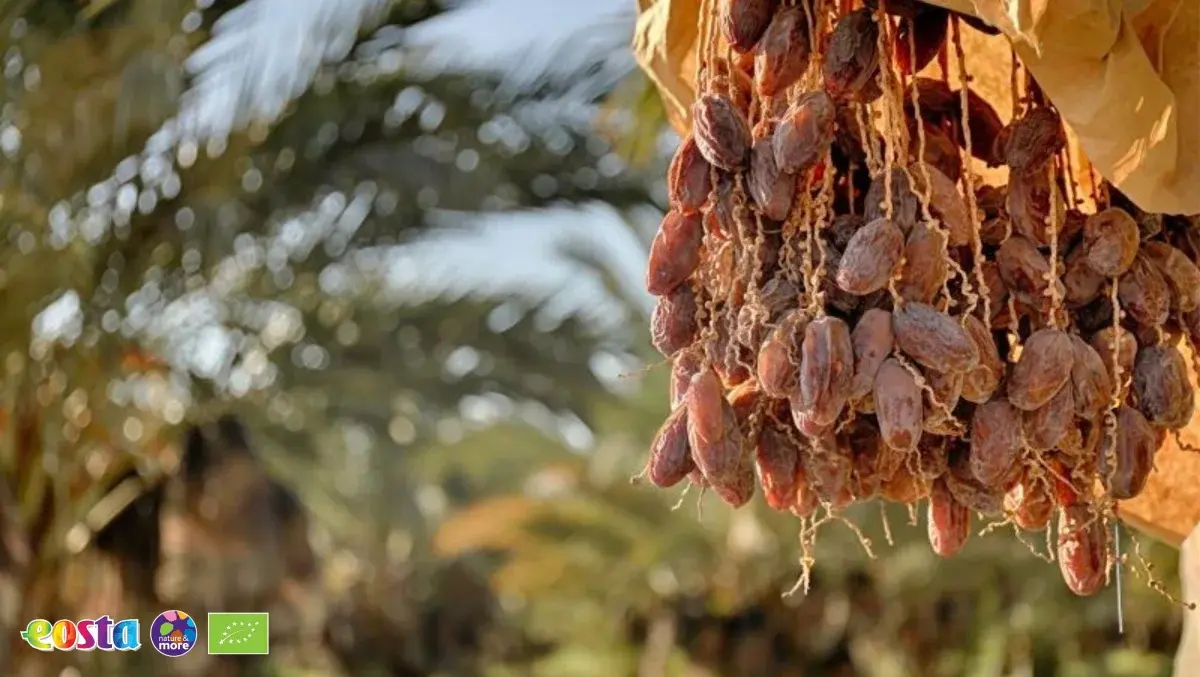
The Medjool date has a remarkable story. Morocco is the historic birthplace of this beloved date. In 1919, production suffered a severe blow due to the outbreak of Bayoud disease. As a result, production fell dramatically and the Medjool date was on the verge of disappearing.
From 2008 onwards, the Moroccan date sector received a new impetus, driven by King Mohammed VI’s vision to revilalise this special sector. First, commercial cultivation was rebuilt; from 2011, Les Délices Majhoul followed with organic Medjool dates from Boudnib/Tafilalet, the region of origin of the Medjool.
In addition to Morocco, Eosta sources organic Medjool dates from Bard Valley in Mexico. This region has a direct link to the Moroccan origin. In the early twentieth century, Medjool palm trees were brought from Morocco to the US to save the variety. Six young shoots from these palm trees were planted in Bard Valley in 1944, where heat, low humidity and water from the Colorado River provide ideal growing conditions. This is how Bard Valley became the home of the US Medjool date.
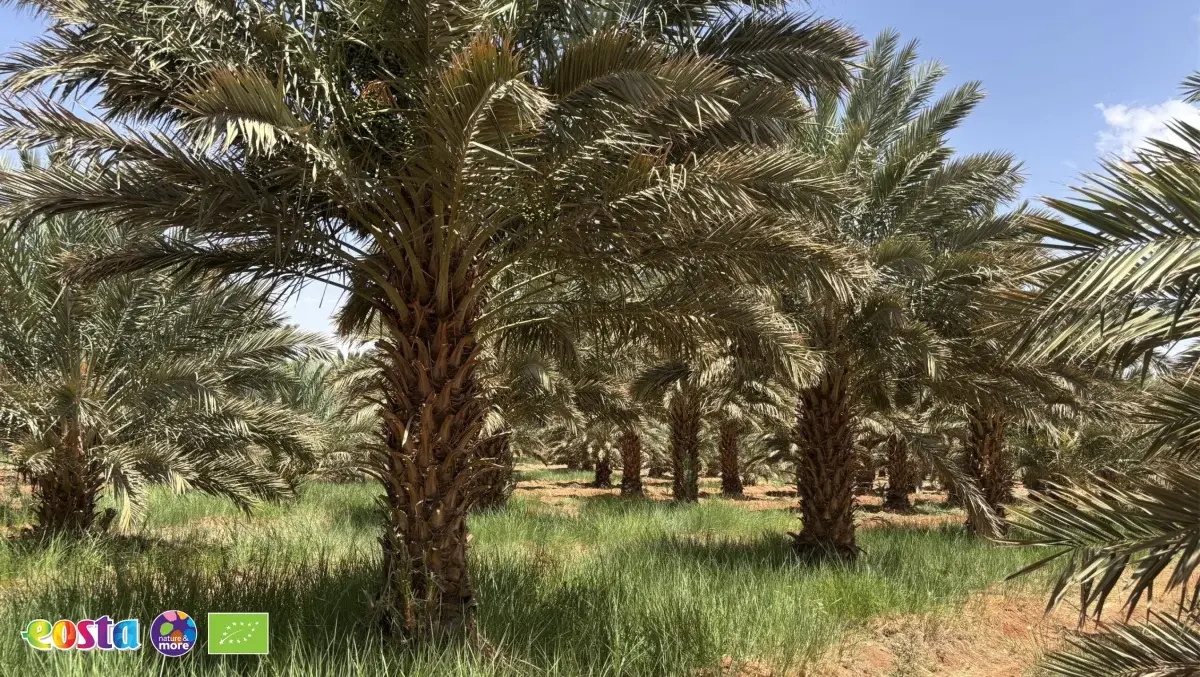




With Les Délices Majhoul from Morocco and Medjool dates from Bard Valley/Mexico, Eosta brings together two strong regions of origin with a shared history. Morocco is the region of origin of the Medjool; Bard Valley is the region where the variety was further developed. This enables Eosta to supply top-quality organic Medjool dates all year round: plump, soft and with a rich natural caramel flavour. Each date tells not only a story of quality, but also of origin, preservation and craftsmanship.
News & releases
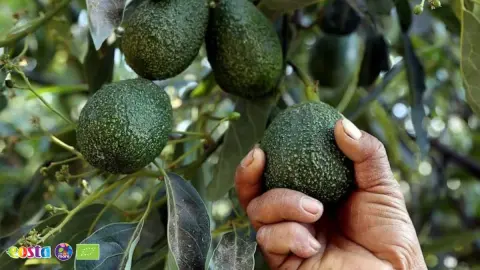
Strong organic avocado supply from Mexico this autumn
Organic avocado supply from Mexico is building well, with good volumes and availability expected over the coming months. Currently, availability is strongest in the larger calibres [14–18], while smaller calibres are expected to become more available as the season progresses.
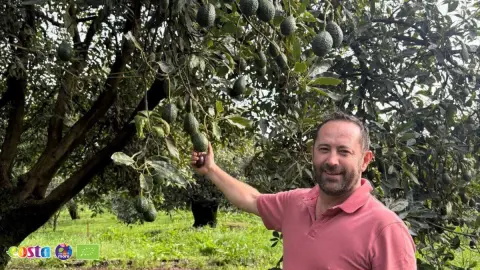
Meet Avova: the family business behind our Mexican Organic Raingrown® avocados
Behind our Mexican Organic Raingrown® avocados is Avova, a family business in Michoacán that Eosta has been working with for many years.
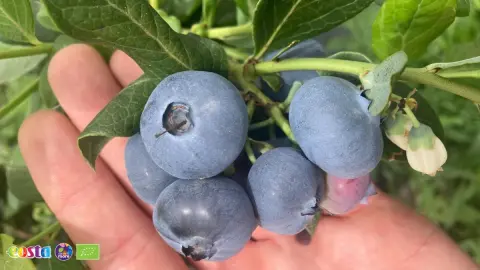
El Niño makes the organic blueberry season more challenging
With the European blueberry season gradually coming to an end, the first organic volumes from South America are on their way. Peru will take the lead in the coming weeks, followed by supply from our long-standing growers in Argentina.
Copyright © Eosta | Webdesign: Pencilpoint - creatief in vorm & inhoud