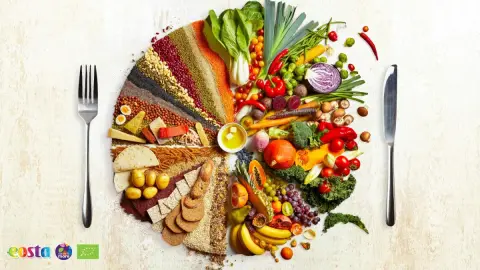
Healthy and sustainable eating does not have to be more expensive. A new study on the Planetary Health Diet (PHD) shows that a diet with more fruit, vegetables, whole grains, legumes and nuts can even be significantly cheaper – while also offering clear health benefits.
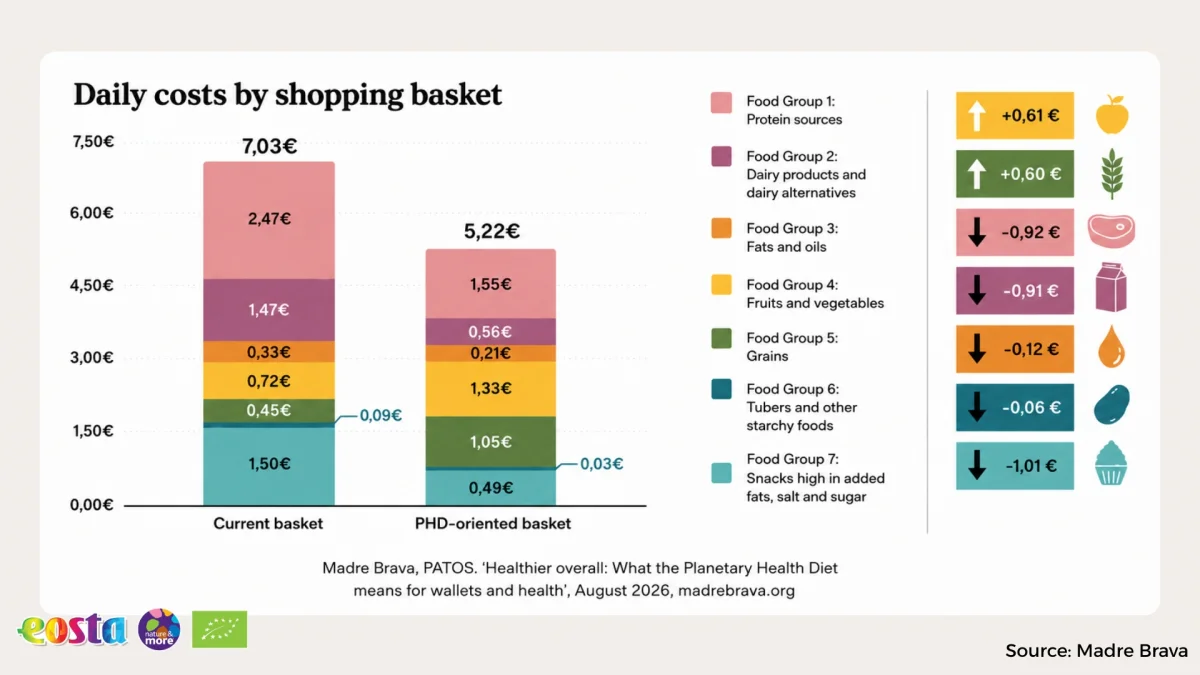
For the study, the current average German food basket was compared with one based on the PHD. For a two-person household, the calculated weekly cost falls from €98.36 to €73.14 – a potential saving of more than €1,300 per year.
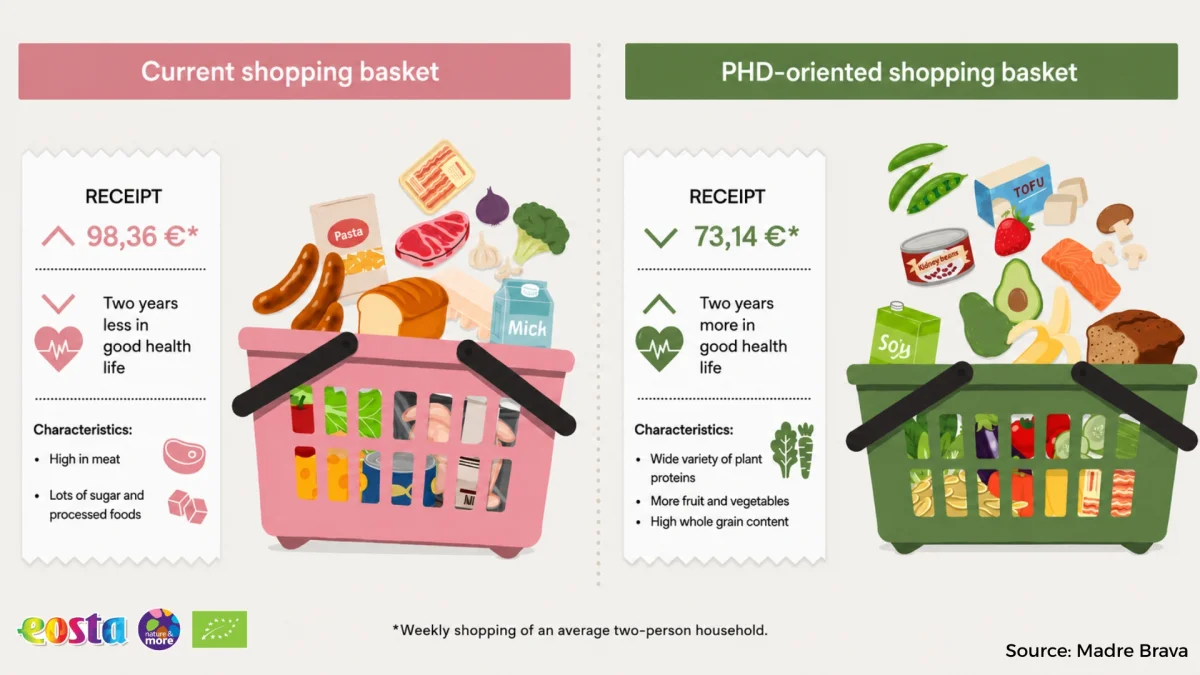 The health models in the report also point to substantial benefits from eating more whole grains, legumes, fruit and vegetables and fewer animal protein sources. Although the price analysis is based on Germany, the development is relevant more broadly: the PHD is an international dietary model.
More room for fruit and vegetables
What stands out is that fruit and vegetables actually play a much larger role in the lower-cost basket. Their share rises from around 14% to almost 28% of the total basket by weight, while daily spending on fruit and vegetables also increases. Total costs fall mainly because less is spent on categories such as animal protein sources, dairy and products high in fat, salt and sugar.
And what if you choose organic?
The study itself does not calculate a fully organic PHD basket. But the figures do reveal something interesting: the €73.14 PHD basket could become 34.5% more expensive and still cost roughly the same as the current average basket of €98.36.
That does not mean a fully organic PHD basket would automatically fit within the same budget. But it does show that changing the composition of the diet creates significant financial room to choose organic more often within the same overall food budget.
What does this mean for supermarkets?
The report stresses that food choices are not determined by consumers alone. Price, availability, visibility, promotions and in-store placement all help shape what ultimately ends up in the shopping basket.
Supermarkets therefore have an important role to play in making healthy and sustainable choices easier: by making products easy to find and affordable, integrating them into familiar shopping and eating routines, and supporting customers with simple inspiration and communication.
For the food market, the study points to a clear development: more plant-based food and more fruit and vegetables do not have to mean a higher total grocery bill.
Read the full report