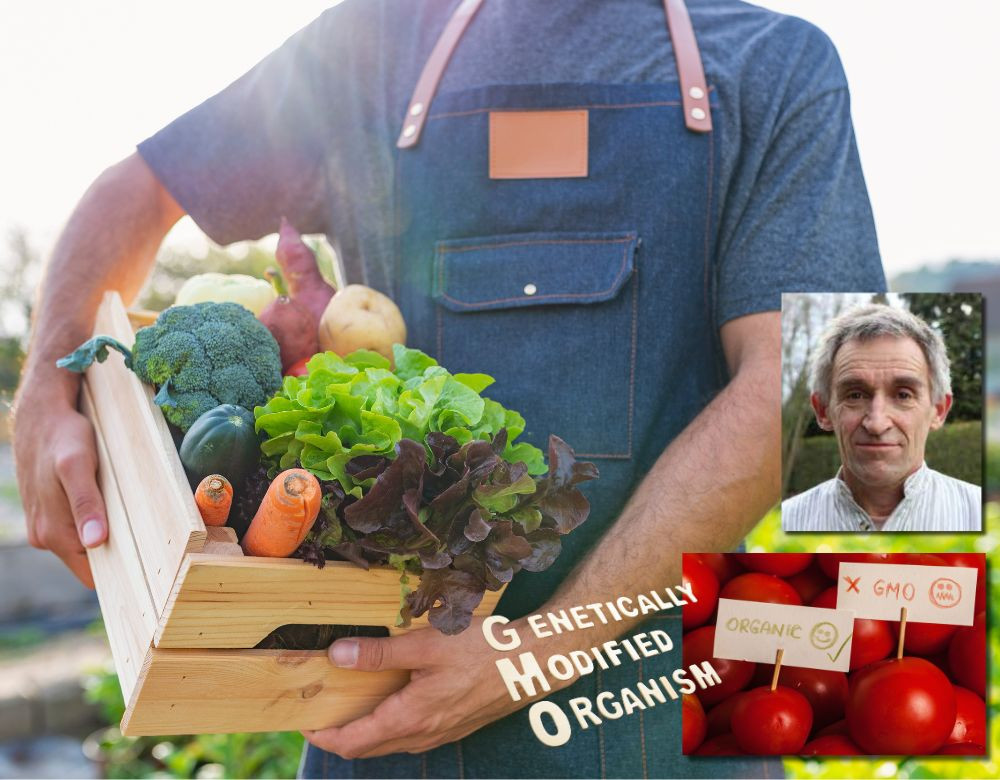
Last week we have had another inspiring lunch meeting at the Eosta office, regarding genetic engineering. Diederick Sprangers is managing director of the Genethica Foundation. He is a biochemist and expert in the field of genetic engineering. Stichting Genethica wants to contribute to a sustainable production and consumption of food, clothing and other consumer products. The focus is on the use of genetic engineering in these products. Stichting Genethica wants to promote clear thinking on this subject among social organizations, companies and governments, in other words 'common sense'. Clearly explaining things about biochemistry that affect people's daily lives.
Many people know by now that genetically modified soy, corn and other plants are used in our food. Many people seriously question the motives for this and its consequences. Food producers are reluctant to reveal that they use genetic engineering in our food: it is mainly in those products that do not fall under the obligation to inform consumers about genetic engineering through labeling. The European Commission and the Dutch government prioritize the "knowledge economy" over sustainable food production. That is the reason they have an indulgent policy on genetic engineering foods. Because that the criteria for its admission here would be so strict is only very partially true.
Diederick has been talking about will talk about the differences and similarities between the old and new GM (genetic modification) techniques, the risks of the new ones, and of course the recent EU proposal for deregulation. All with an eye on organic, nutrition, health, agriculture.
More information, click here