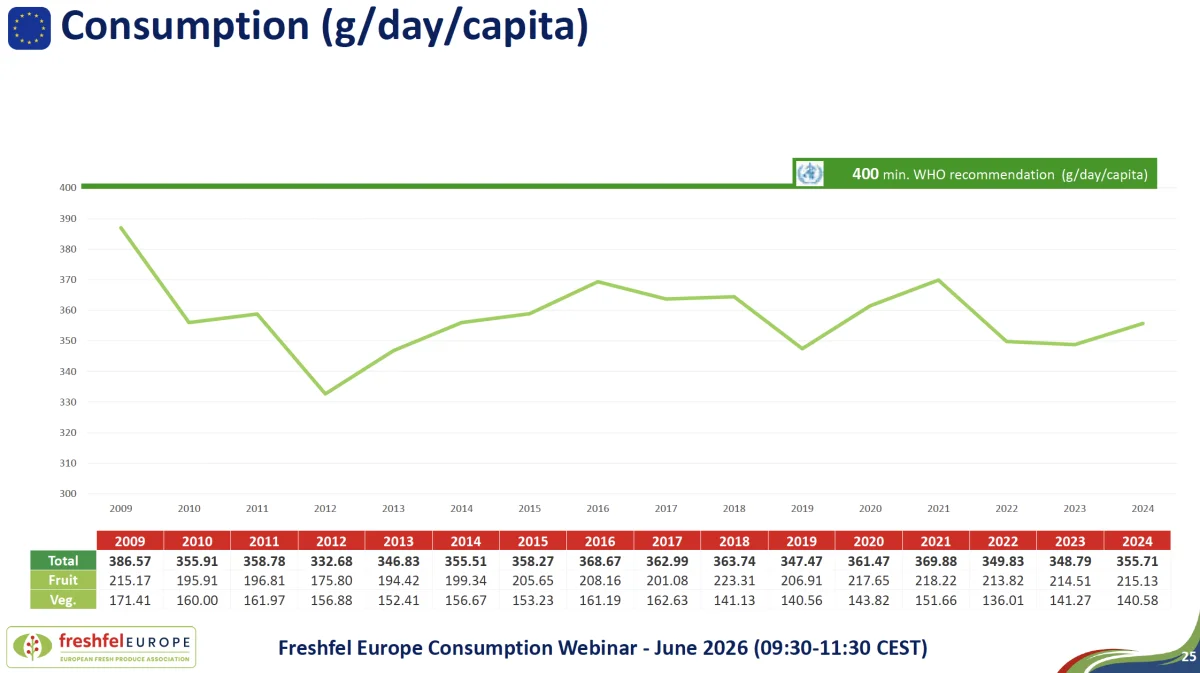
Average consumption of fresh fruit and vegetables in the EU rose by 1.98% in 2024 to 355.71 grams per person per day. This represents a slight improvement on 2023, but remains well below the World Health Organization’s recommended minimum of 400 grams per day. Only five EU countries meet this threshold.
According to Freshfel Europe, the long-term figures primarily point to stagnation. The temporary increase seen during the COVID-19 pandemic has not been sustained, partly because the economic crisis has put pressure on consumers’ purchasing power.
Positioning fresh produce more strongly
According to Freshfel, a broader, consumer-focused approach is needed to increase consumption in the long term. Awareness of the health and sustainability benefits alone does not appear to be sufficient. Health, taste, quality and value for money are key purchasing motivations, whilst convenience is becoming an increasingly important factor.
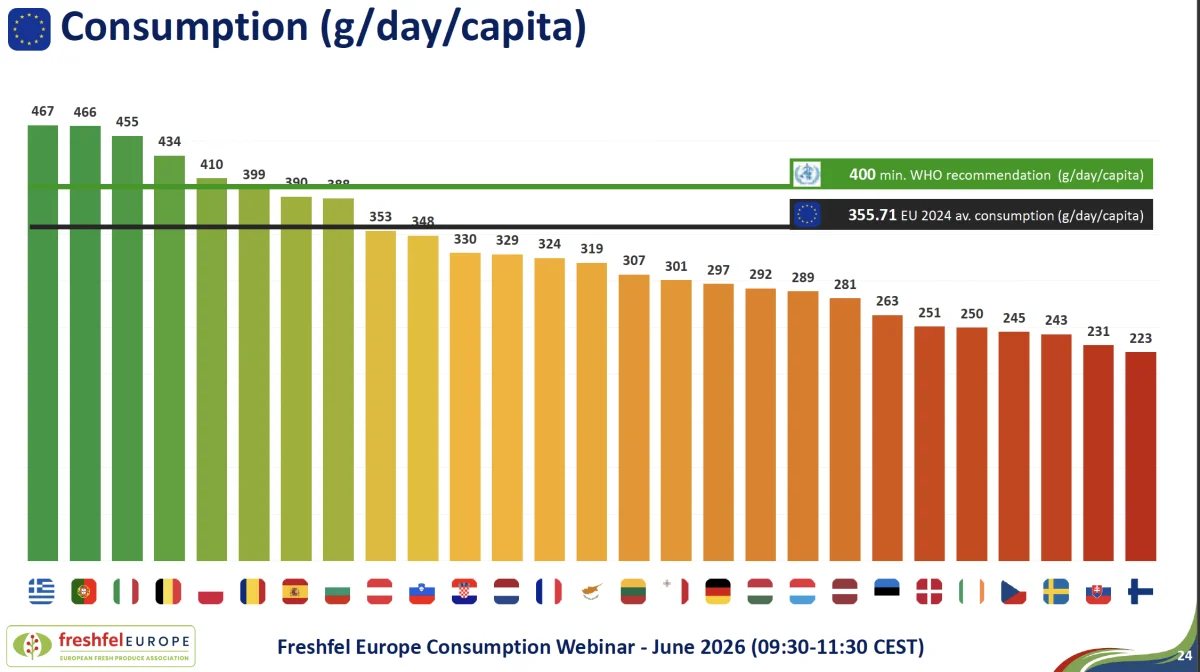
This calls for greater in-store visibility, products suited to quick meals and snack occasions, simple preparation and meal solutions, and stronger communication around taste, health, origin and sustainability.
Fresh fruit and vegetables are competing with ultra-processed products, which are often marketed much more aggressively and backed by strong branding and consumer-focused campaigns.
Fresh First
Through its Fresh First approach, Freshfel aims to place fruit and vegetables more centrally within food, health and sustainability policies. The organisation emphasises the need for swift action, particularly among younger generations.
Find out more on the Freshfel Europe website, including further information on the Consumption Monitor and European consumption trends.
The full Freshfel Consumption Monitor is available free of charge to Freshfel members and for a fee to non-members.
Source: Freshfel Europe, Consumption Monitor 2026: A stronger consumer-based approach is needed to place fruit and vegetables at the centre of a healthy diet, 9 June 2026.