
This website uses cookies
Can we use cookies to make your experience even better? By selecting “Accept”, you’re letting us know you’re okay with all cookies, as explained in our privacystatement.


From field to hospital: the rise of fungal resistance
Hospitals are reporting a worrying development: fungal infections are becoming increasingly difficult to treat due to rising resistance to existing medicines. A recent article in the Dutch newspaper NRC highlights this issue, which is also being observed more frequently worldwide.
From agriculture to healthcare
International research shows that this concern is more widespread. In particular, the use of azoles – a group of antifungal agents used in both agriculture and the medical world – is central to this issue. Resistant strains of Aspergillus fumigatus, a common fungus, are now being found not only in patients but also in the environment, such as in soil and plant debris.
Resistance outside the hospital
It is striking that this resistance also occurs in patients who have never previously been treated with antifungal medication. This suggests that the origin of this resistance lies (in part) outside the hospital. European and international studies therefore refer to this as a ‘One Health’ issue, in which agriculture, the environment and healthcare are closely interlinked.
Impact on vulnerable patients
For vulnerable patients, such as those with compromised immune systems, this can have serious consequences. Infections with Aspergillus fumigatus can lead to invasive lung infections, where treatment options are limited and mortality rates can rise significantly. Precisely because the number of effective medicines is limited, resistance has a direct impact on treatability in these cases.


No clear picture yet
At the same time, the scientific community is not yet entirely clear on the exact contribution of agricultural use to resistance in clinical settings. Regional differences are significant and other factors also play a role. What is clear, however, is that the use of similar active substances across sectors creates shared selection pressure for resistance.
Taking a broader view of sustainability
For the food chain, this means that sustainability is being viewed in an increasingly broader context. In addition to environmental impact and yield, the relationship with public health and the long-term resilience of cropping systems is coming into sharper focus.
This development underscores the importance of cropping systems that are less reliant on synthetic fungicides and contribute to a more robust ecosystem. Sustainability therefore affects not only the environment, but also the overall resilience of our food chain and public health.
Sources: NRC Handelsblad (2026); EFSA (2025); Frontiers - Berger et al. (2017); Oxford Academic - Fengler et al. (2026); Science Direct - Verweij et al. (2020); MDPI Journal of Fungi - Zubovskaia (2025); RIVM (2018).
News & releases
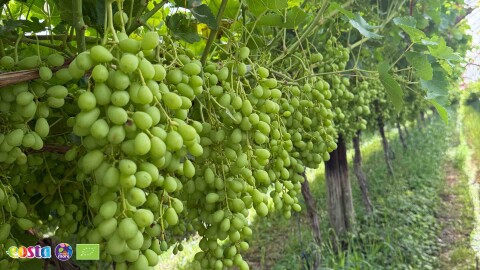
Organic grapes 2026/27: plan ahead to secure volumes
The overseas grape season starts in mid-December, but planning begins now. Demand for organic grapes remains strong and our growers need early visibility on the volumes they can reserve for fixed programmes. By aligning programmes in advance, we can secure organic volumes more effectively and are also in a stronger position to offer competitive pricing.
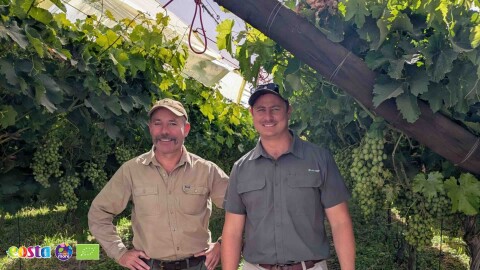
Carpe Diem: quality organic grapes start with the soil
Along the Orange River in South Africa’s Northern Cape lies Carpe Diem, a long-standing and trusted partner for our organic grapes. Owner Gog van der Colff took over the family business in 2000 and made the deliberate decision to switch to organic farming in 2006. What began as a step that not everyone was initially convinced by has developed into a progressive organic farm producing grapes, pecans and raisins.
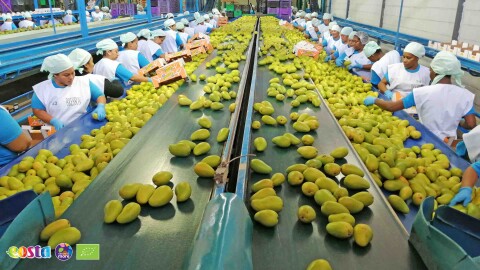
Mango outlook: tighter Peru supply, strong start in Ecuador
El Niño is clearly affecting the South American mango season this year. Higher temperatures and unusual rainfall patterns are disrupting flowering, making availability and harvest timing less predictable.
Copyright © Eosta | Webdesign: Pencilpoint - creatief in vorm & inhoud