Over the last years, blueberry sales have exploded… along with the annoying amount of plastic boxes they are sold in. We at Eosta offer plastic-free packaging alternatives for blueberries. Let's make the berries plastic-free!
Paul Hendriks, Eosta's innovative packaging manager who previously drew the attention of the international media with Natural Branding (laser marking), cardboard from sugar cane waste material and other sustainable packaging innovations, is working to make the blueberries plastic free. His credo: “The most sustainable packaging is no packaging.” Eosta has several plastic-free packaging options for the berries.
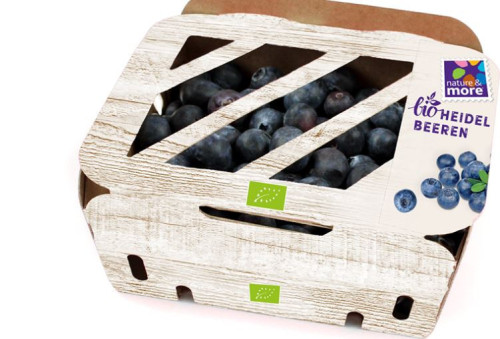
Plastic-free berries #1: sugarcane cardboard punnet
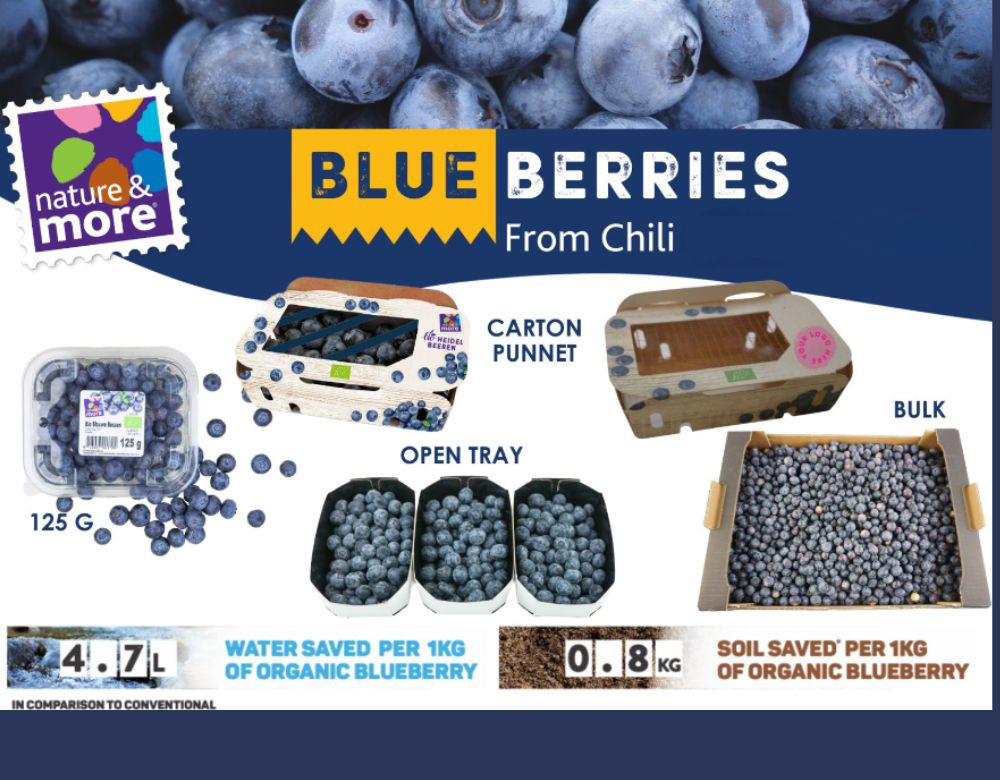
Why pack in plastic if you can also use sustainable cardboard packaging? Eosta offers sugarcane cardboard punnets for 125/200 grams. Exactly eight/six trays fit in a flat box, so that looks great.
Plastic-free berries #2: the shakers
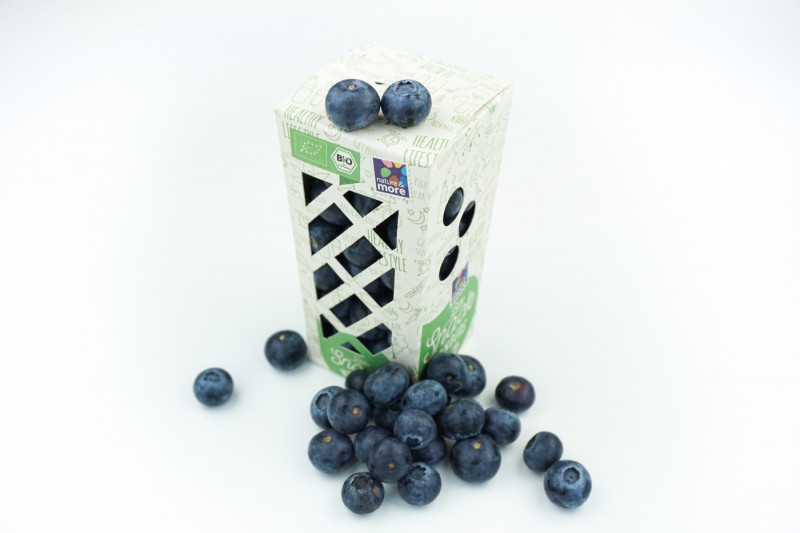
Eosta has two types of shakers available (cups made of sugarcane waste cardboard) to put berries in, one that is completely plastic-free and one with a transparent bioplastic window. This packaging is also suitable for the “to-go” market.
Plastic-free berries #3: the radical solution
Why pack if you can avoid it? Some of Eosta's health food clients in Germany buy the berries in bulk and offer them unpacked in the store. The consumer puts the berries into a paper bag or a container of his choice.
Nature & More berry growers
Would you like to know more about our organic blueberries? Then take a look at the Nature & More page of grower Andres, who grows berries using rainwater.