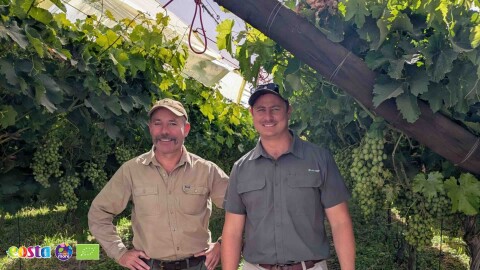
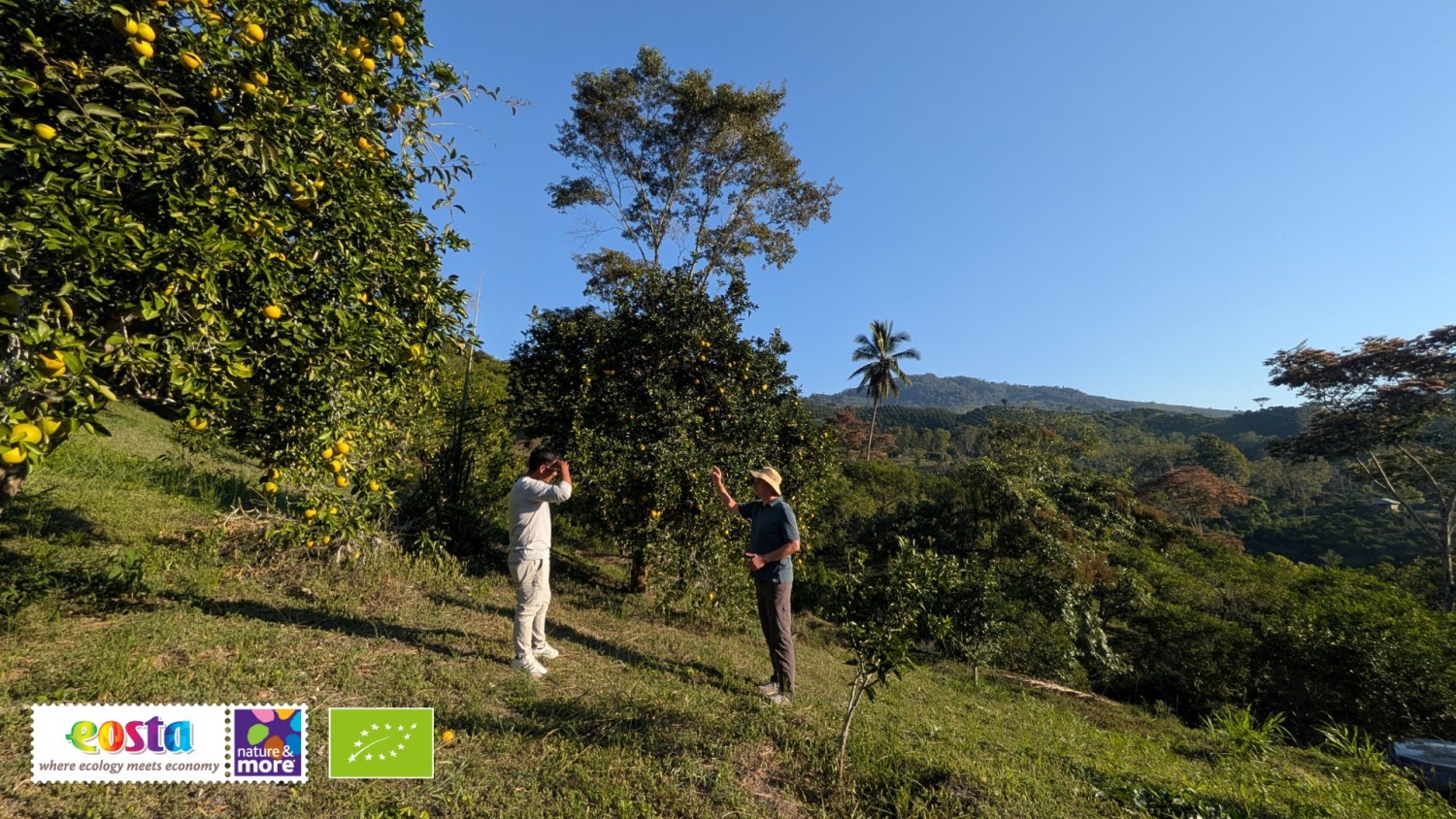
Last month, our colleagues Gert-Jan and Peke travelled to Peru for a series of visits to orange and ginger growers. The highlight was a visit to the Kivinaki cooperative, where they were welcomed as guests of honour. This project is of great significance to the farmers: it is the first time that their oranges are being exported to Europe as a fresh product under their own management.
Last month, our colleagues Gert-Jan and Peke travelled to Peru for a series of visits to orange and ginger growers. The highlight was a visit to the Kivinaki cooperative, where they were welcomed as guests of honour. This project is of great significance to the farmers: it is the first time that their oranges are being exported to Europe as a fresh product under their own management.
From coffee to citrus
Coffee has been an important crop in the region for decades. However, after a major outbreak of coffee rust (La Roya) in 2013, coffee disappeared from the lower-lying areas. Many farmers switched partly to oranges and ginger, often alongside their existing coffee plots on higher ground. This diversification now forms the basis for a new phase: first in the form of exports of organic orange juice, and now also as a fresh product.
Living income and biodiversity
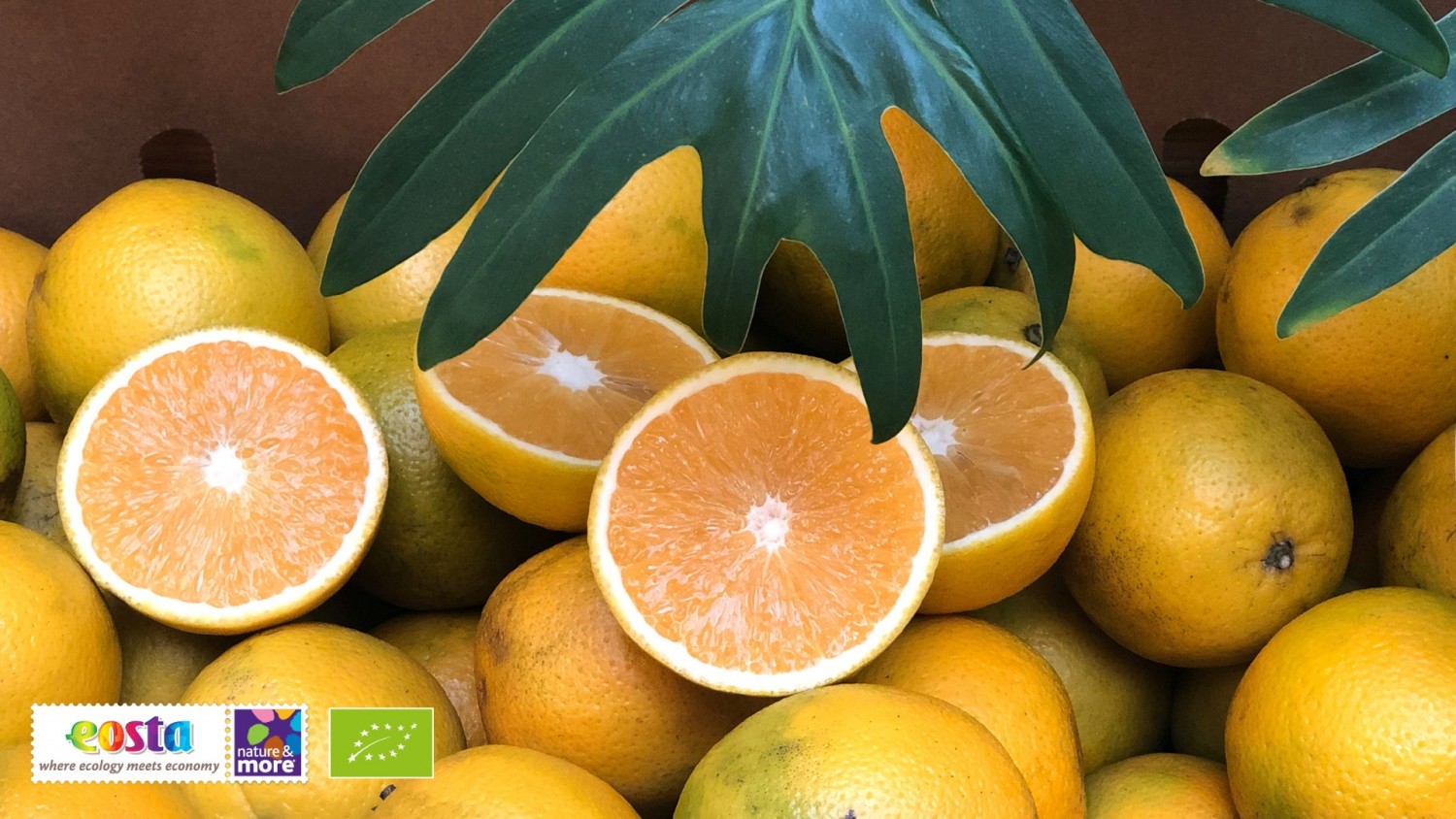
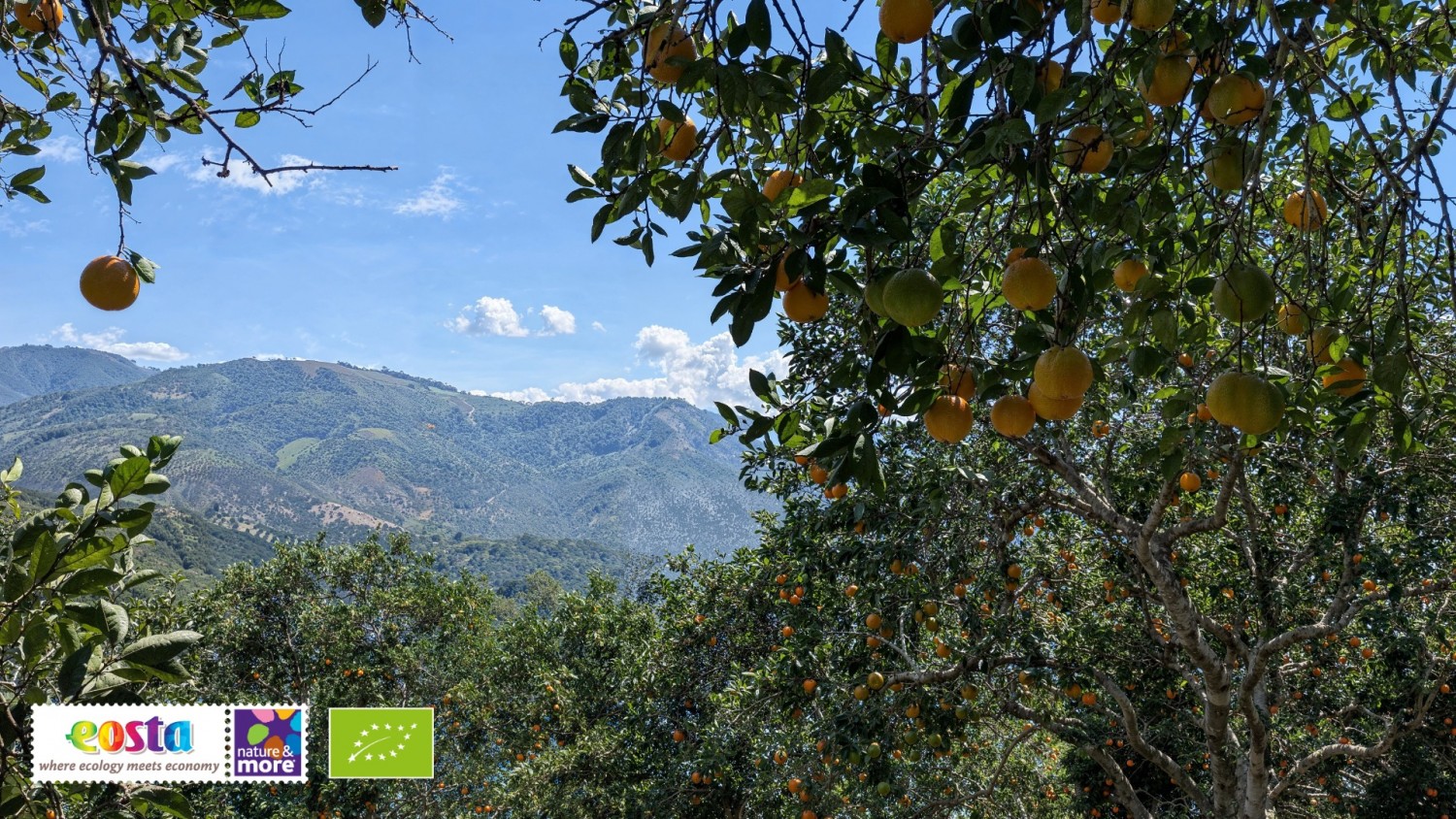
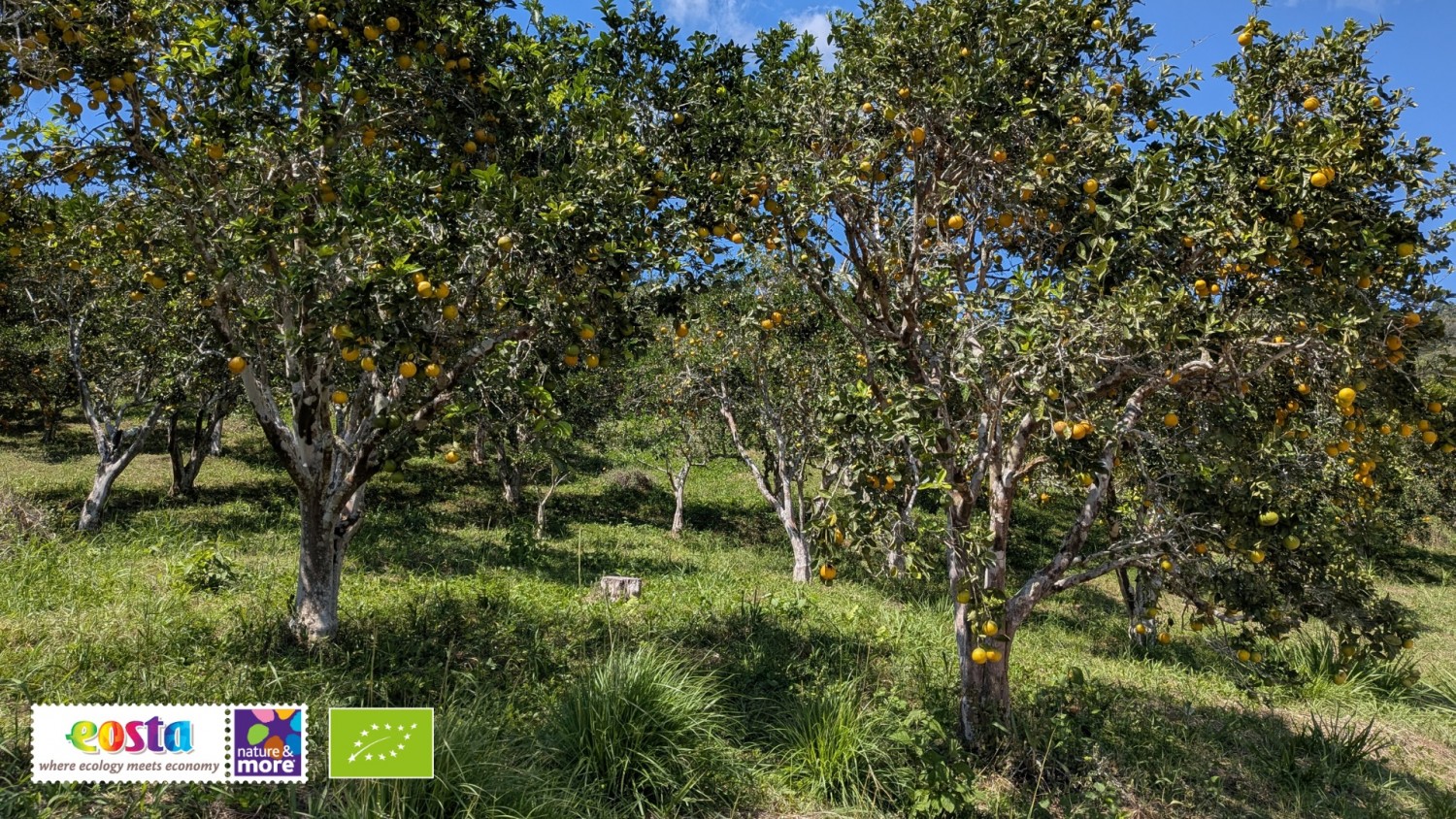
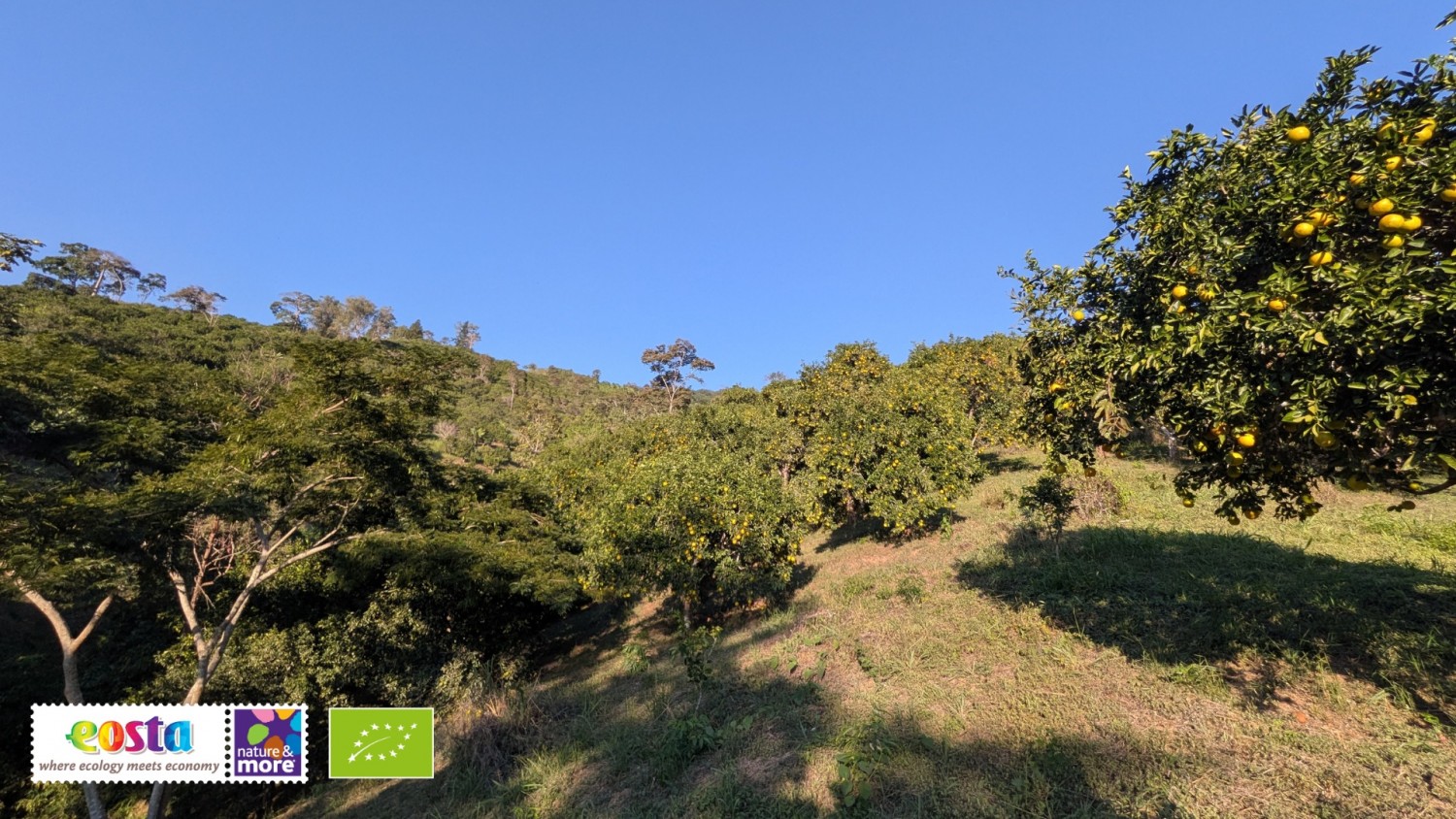
The Kivinaki growers are smallholders with an average of 5 to 6 hectares of orange trees. Most farmers combine citrus with other crops such as mango, papaya, coconut, banana, pe , corn, pepper and bamboo, which ensures biodiversity and natural resilience on the land. Organic farming methods are used, with natural fertilisers such as compost and guano de isla (organic fertiliser from seabirds). Three hectares of orange cultivation is enough to earn a living income – enough for food, housing, healthcare, education and a small reserve. Most Kivinaki farmers exceed this threshold by a considerable margin.
First container: a milestone
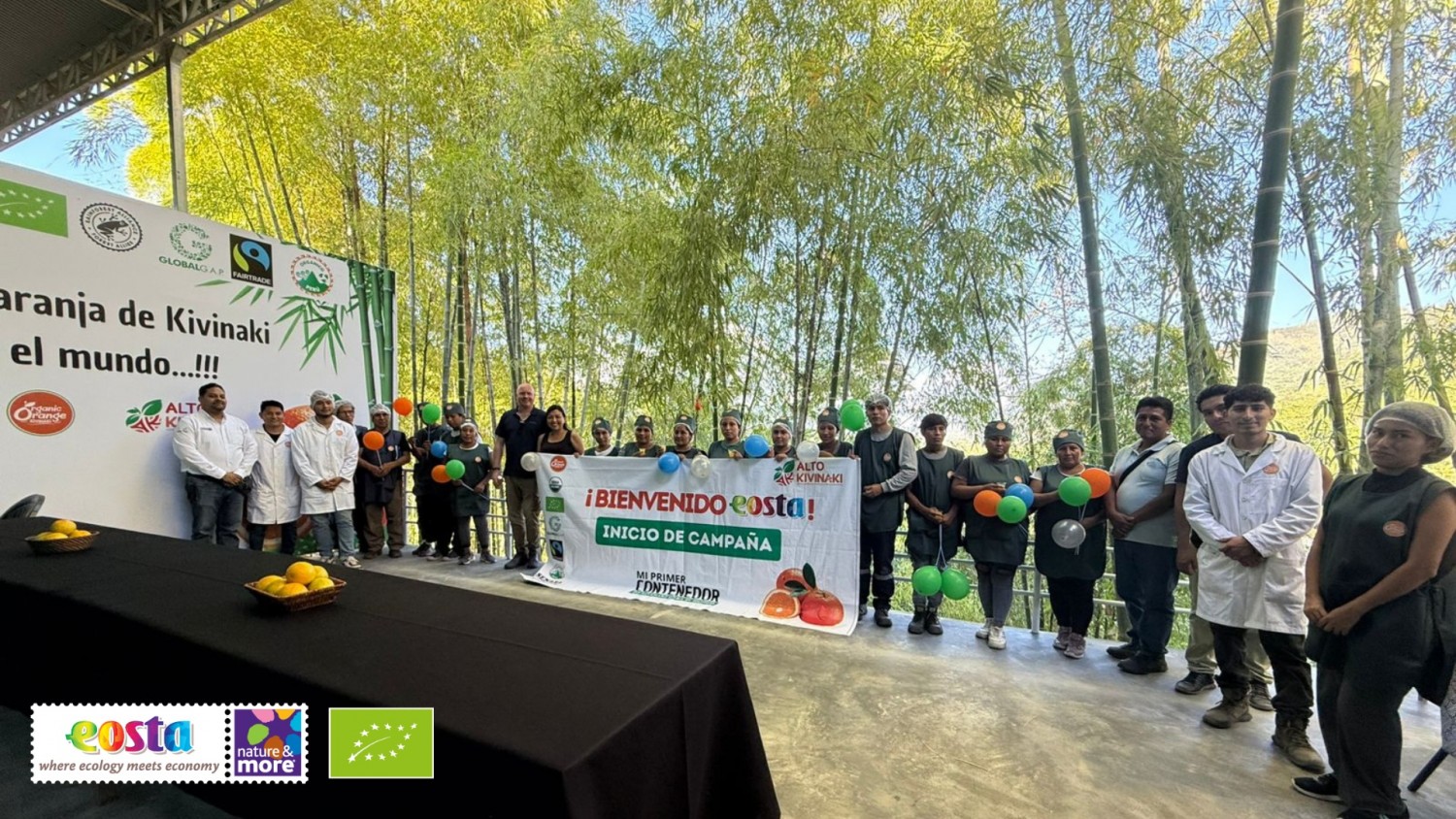
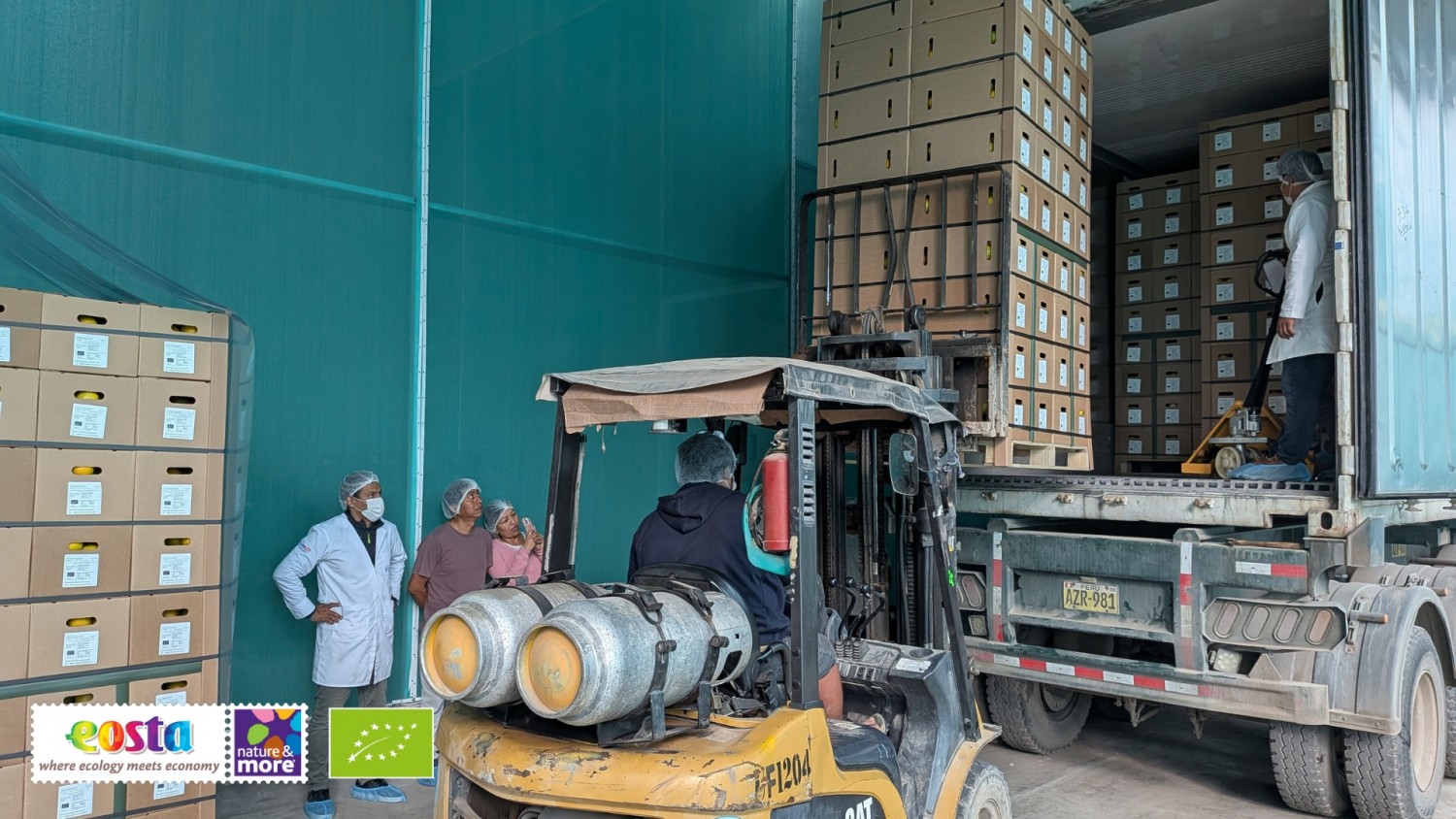
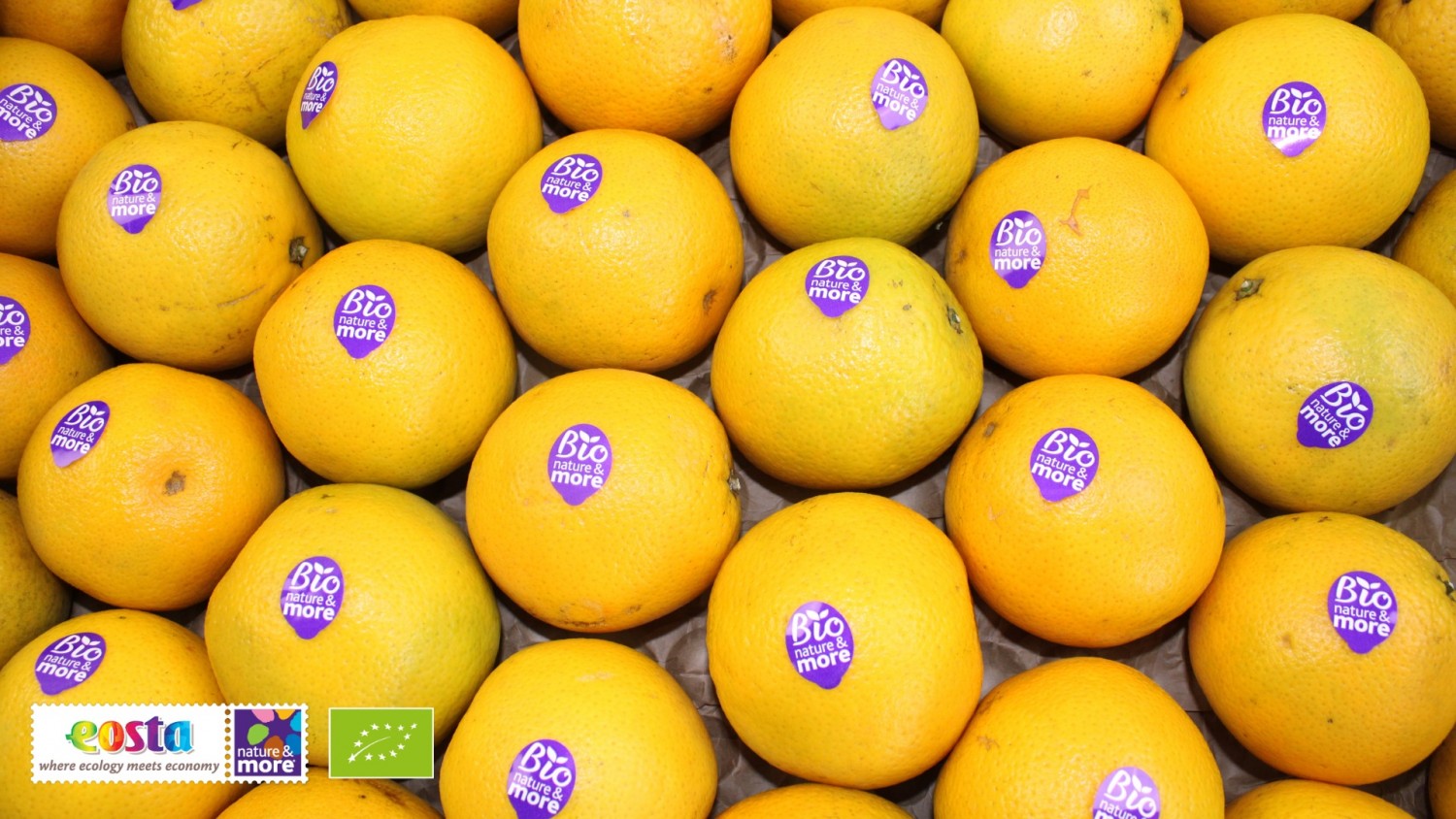
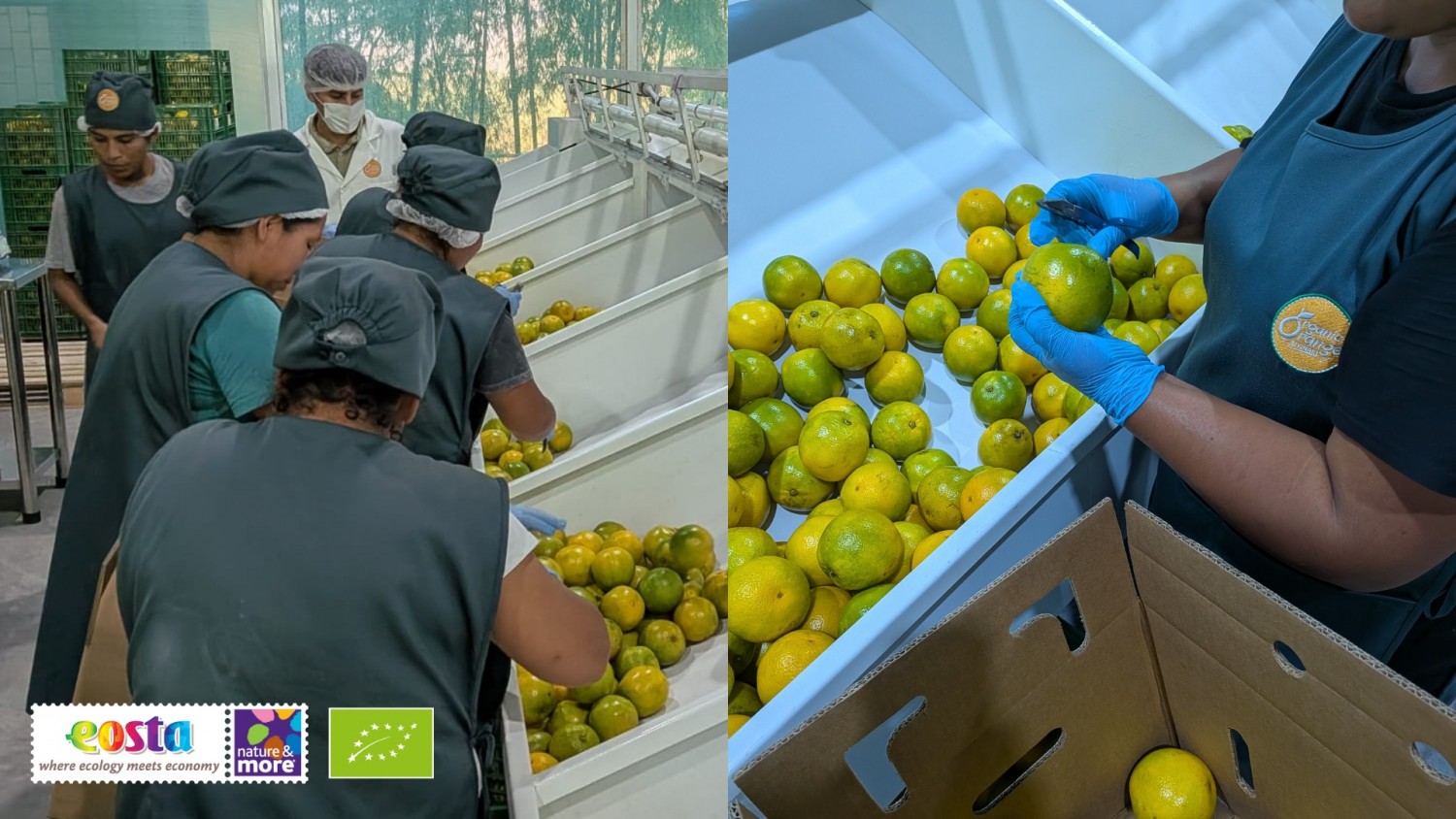
The departure of the first container was celebrated in style. Peke helped out on the work floor, answered questions about specifications and checked the first boxes together with the team. After the pallets were assembled by a local company with experience in exporting fresh produce, the container was waved off to applause and cameras. A historic moment for Kivinaki, Agroideas and Eosta.
Government support as a catalyst
This project is of great importance to Peru. The government, through Agroideas, covered most of the investment in Kivinaki's new warehouse. This is a direct boost for sustainable cultivation and economic development in the region.
Trust and commitment
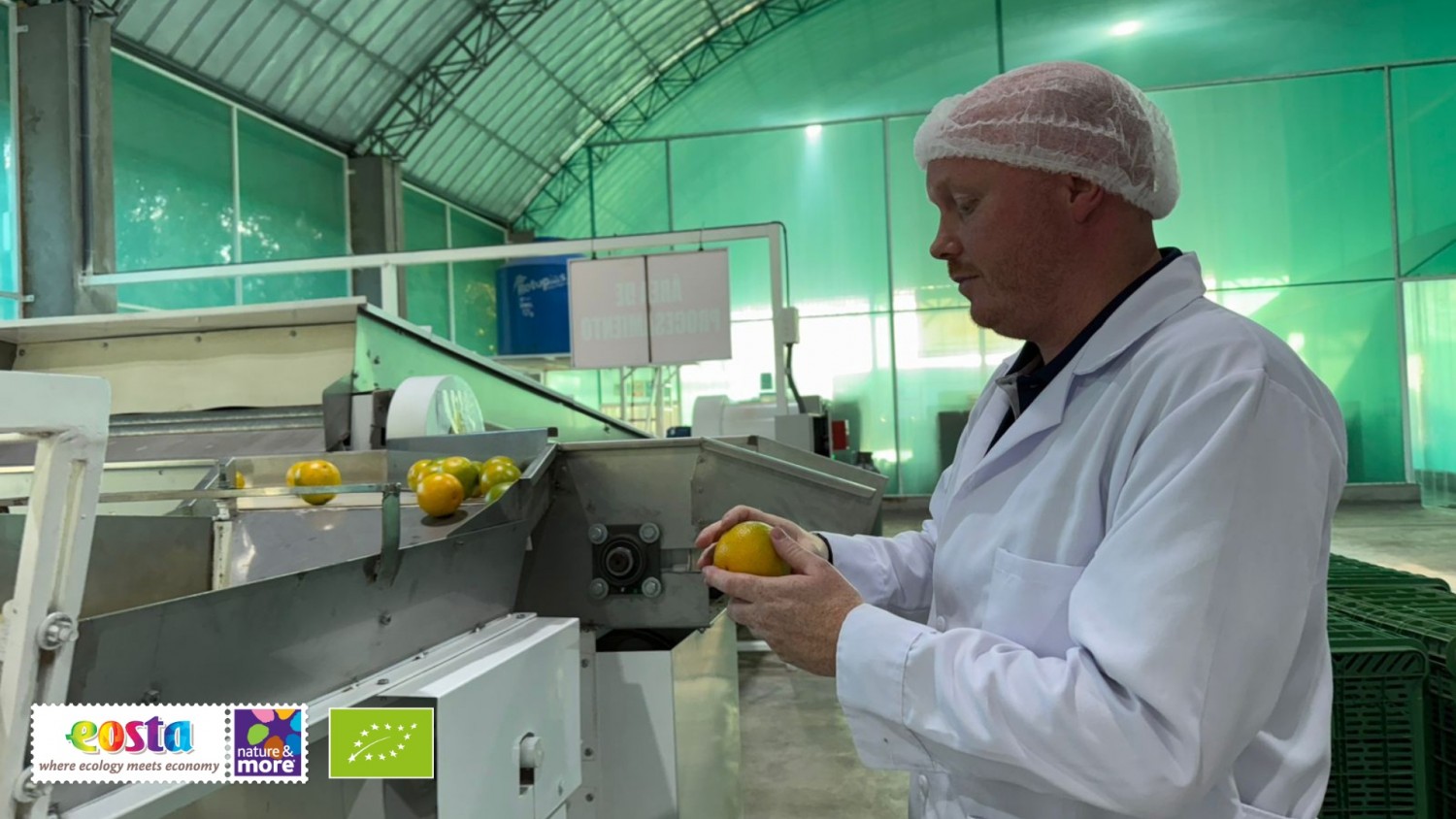
During the visit, Eosta provided support on all fronts: from quality control and packaging details to logistical advice and market insights. The mutual commitment and enthusiasm underscored the confidence in this new partnership.
Visit to our new grower Elisur Organic
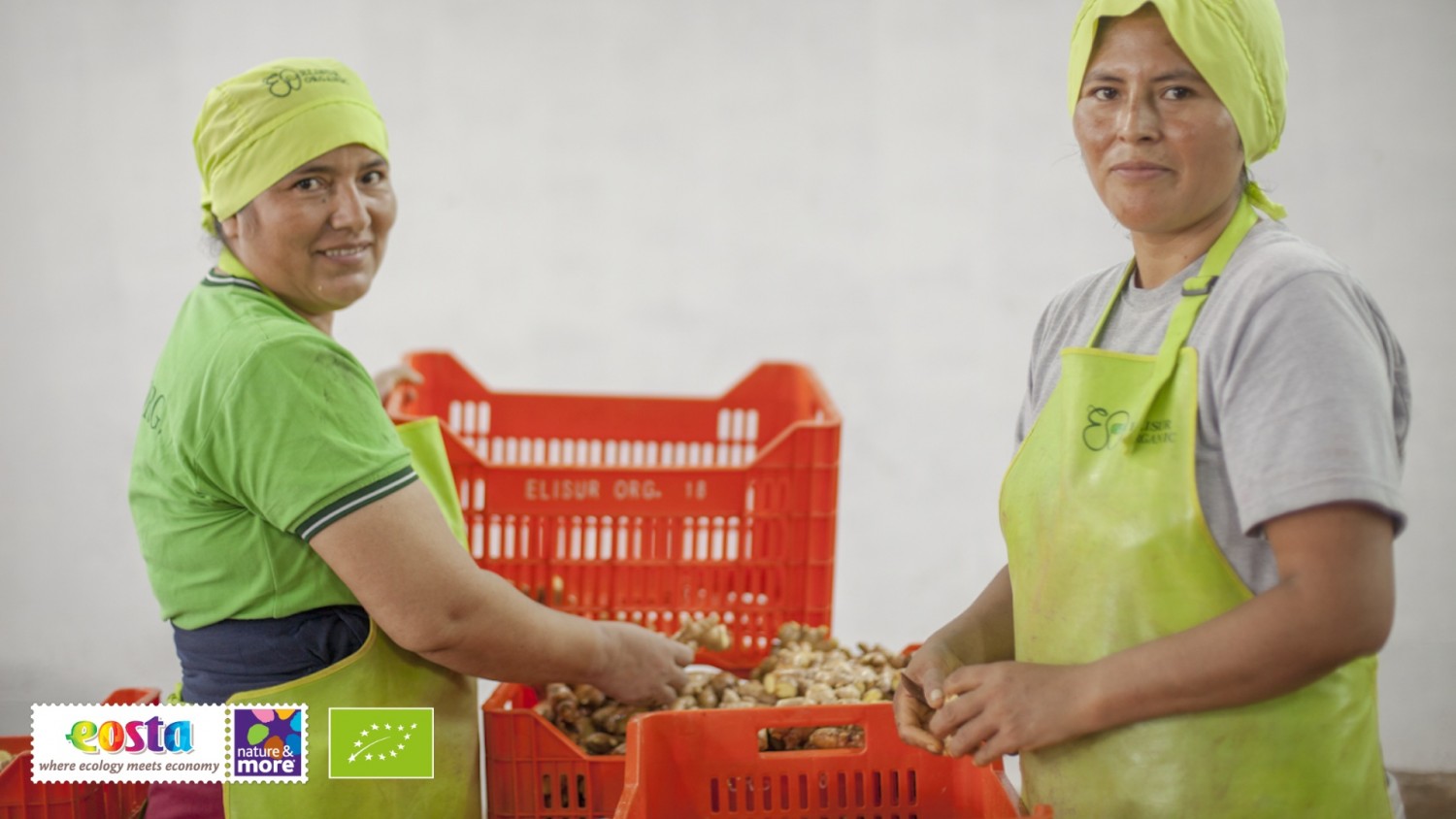
Gert-Jan also visited Elisur Organic, a professional supplier of organic ginger founded in 2015 by four friends. The company works with smallholders and follows a strict protocol to guarantee quality and food safety. The ginger is organically grown, and Elisur also offers Fairtrade-certified ginger. 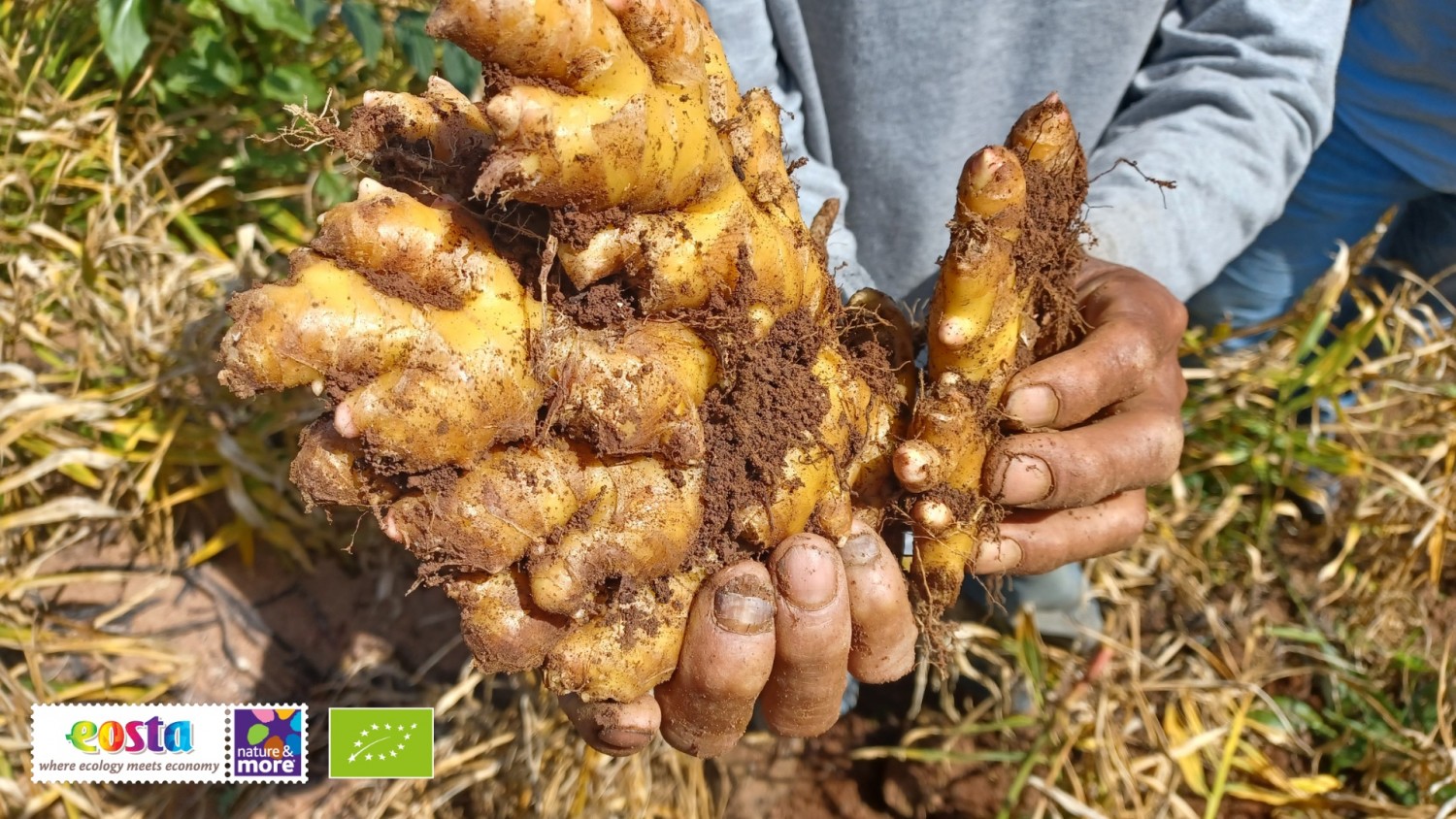
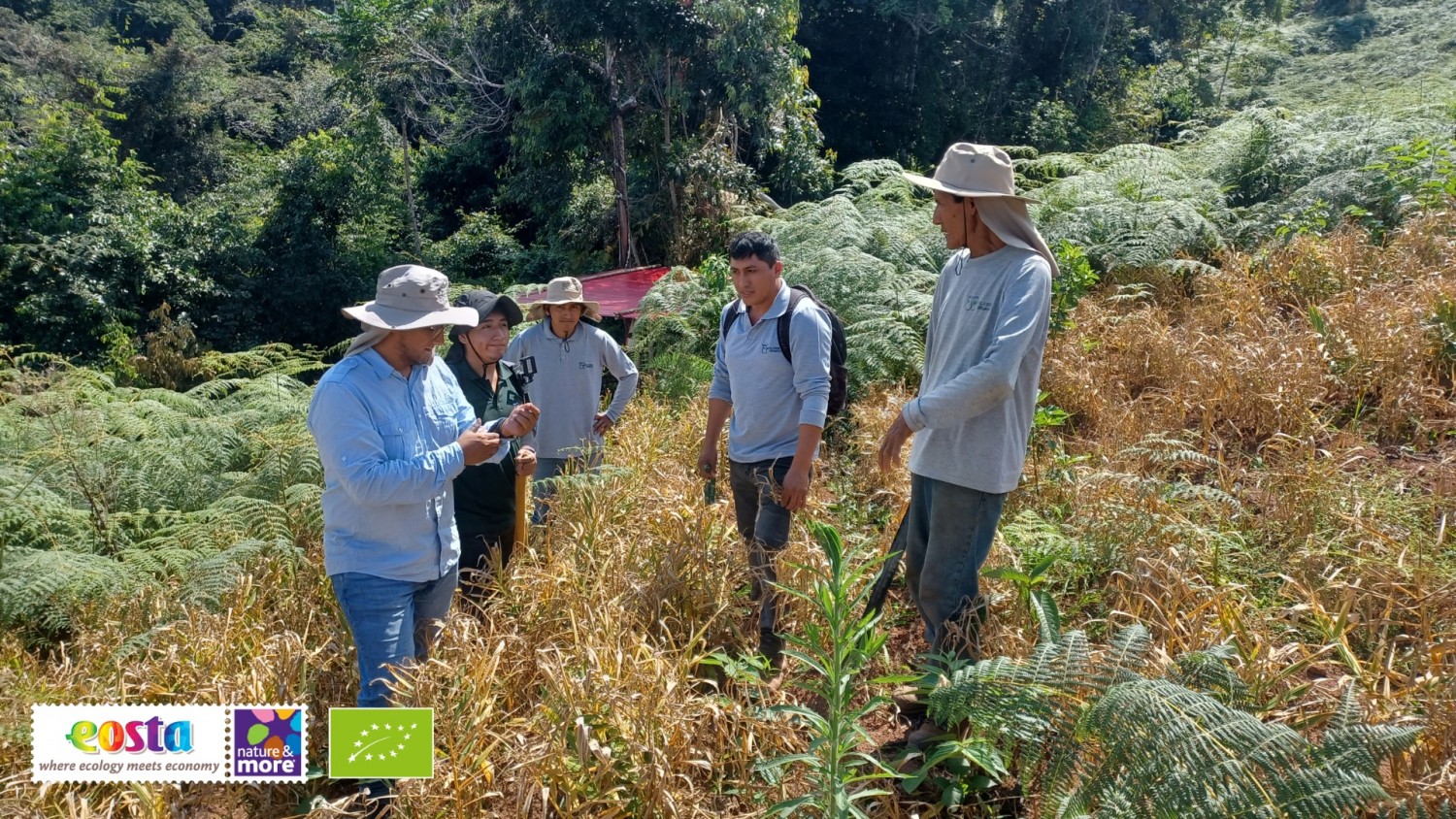

Eosta visits all its suppliers in person before delivery. This allows us to monitor cultivation methods and product quality, but above all, it helps us build personal relationships. With Elisur, we have taken a promising first step in this direction. 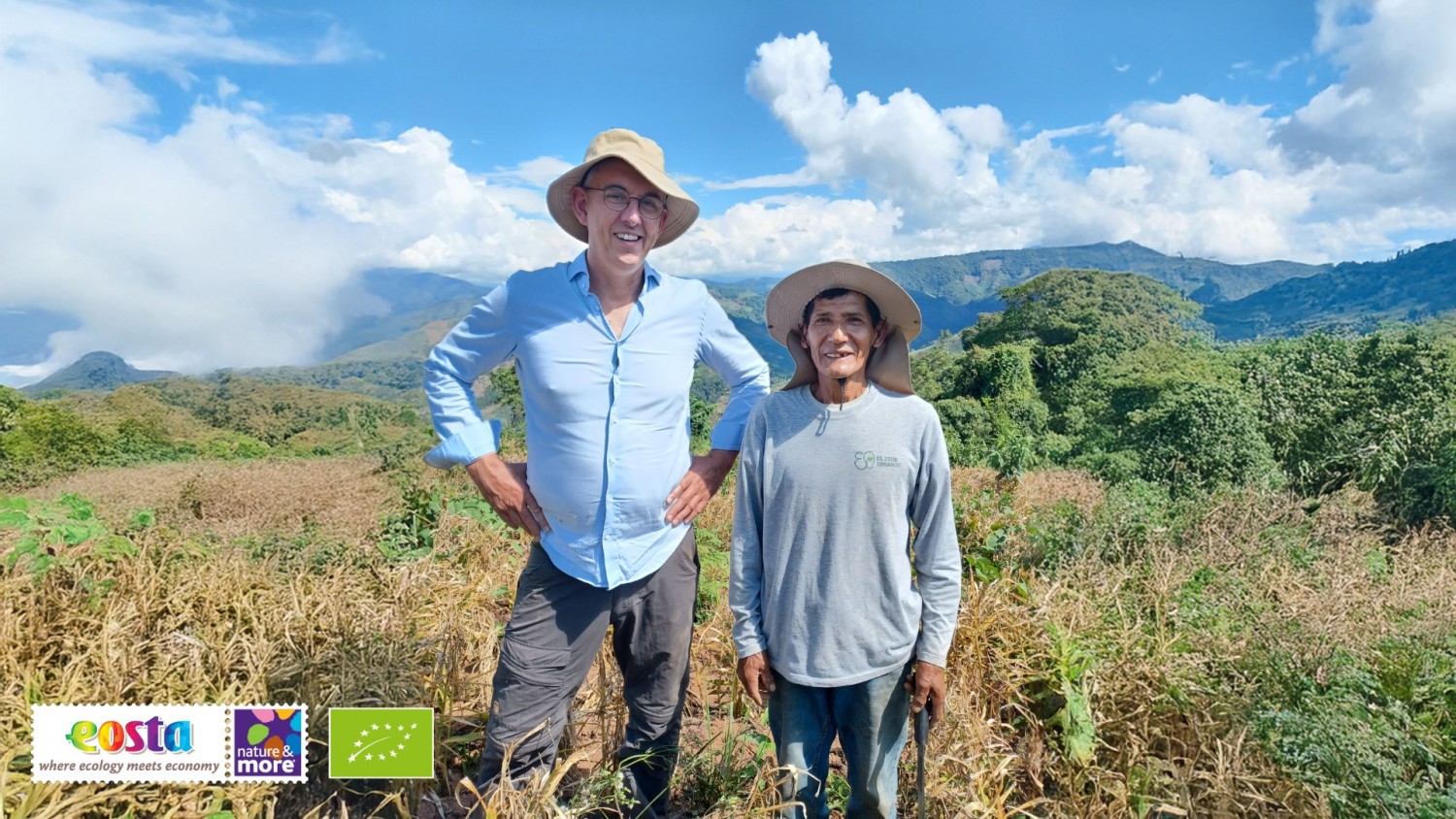

Would you like to know more about our Peruvian growers or their products? Please contact your Eosta account manager.