
This website uses cookies
Can we use cookies to make your experience even better? By selecting “Accept”, you’re letting us know you’re okay with all cookies, as explained in our privacystatement.


Fairtrade premium in action in Kenya
The Murang'a South Growers Group is one of two grower groups within Mavuno. Within this group, different villages work together in a joint cooperative in which decisions are taken collectively.
The Fairtrade premium — a fixed surcharge on top of the product price that is earmarked for joint investments — has been paid to this cooperative. The affiliated villages then decide together how this premium will be used. With multiple communities and shared responsibility, this requires careful coordination. Every expenditure must be widely supported.

A conscious choice: goats
The members decided to invest the premium in the purchase of goats. Each community receives one goat. Ownership remains with the cooperative, while the villagers are allowed to use the goats' produce, such as milk.
The choice is practical and locally relevant. Goats provide direct nutritional value, create additional income opportunities and increase the resilience of households, while collective ownership strengthens cohesion within the cooperative.


The power of local decision-making
From a Western perspective, this use of funds might not have been the first idea that came to mind. That is precisely why this example underlines the core principle of Fairtrade: the community itself determines what is valuable in its own context.
The premium is thus not an externally imposed project, but an instrument for self-development and strengthening the local structure. This is how the Fairtrade premium takes concrete shape within Mavuno's avocado chain.
News & releases
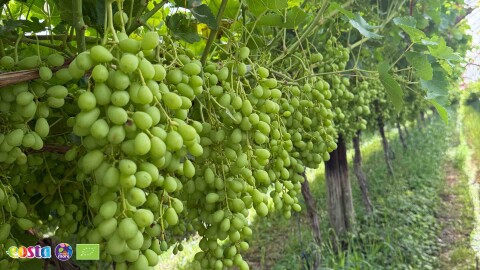
Organic grapes 2026/27: plan ahead to secure volumes
The overseas grape season starts in mid-December, but planning begins now. Demand for organic grapes remains strong and our growers need early visibility on the volumes they can reserve for fixed programmes. By aligning programmes in advance, we can secure organic volumes more effectively and are also in a stronger position to offer competitive pricing.
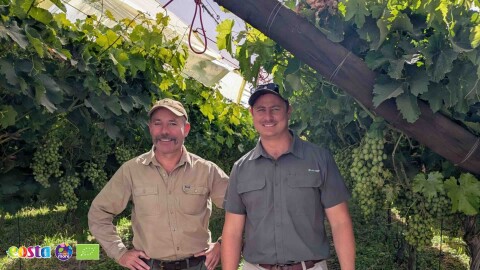
Carpe Diem: quality organic grapes start with the soil
Along the Orange River in South Africa’s Northern Cape lies Carpe Diem, a long-standing and trusted partner for our organic grapes. Owner Gog van der Colff took over the family business in 2000 and made the deliberate decision to switch to organic farming in 2006. What began as a step that not everyone was initially convinced by has developed into a progressive organic farm producing grapes, pecans and raisins.
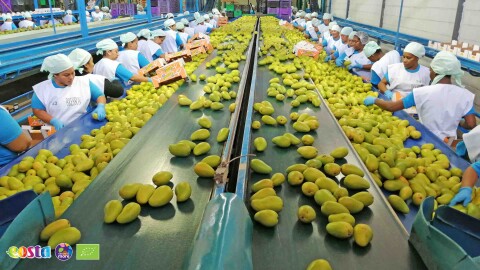
Mango outlook: tighter Peru supply, strong start in Ecuador
El Niño is clearly affecting the South American mango season this year. Higher temperatures and unusual rainfall patterns are disrupting flowering, making availability and harvest timing less predictable.
Copyright © Eosta | Webdesign: Pencilpoint - creatief in vorm & inhoud