This website uses cookies
Can we use cookies to make your experience even better? By selecting “Accept”, you’re letting us know you’re okay with all cookies, as explained in our privacystatement.

The invisible power of organic food
What do crystal structures tell us about the quality of our food? Various studies reveal striking differences between organic, biodynamic and conventionally grown foods. The crystal images suggest that organic and, in particular, biodynamic products may be more resistant to stress, such as natural ageing processes after harvest. What does this mean for the shelf life of fruit and vegetables?
A hidden world under the microscope
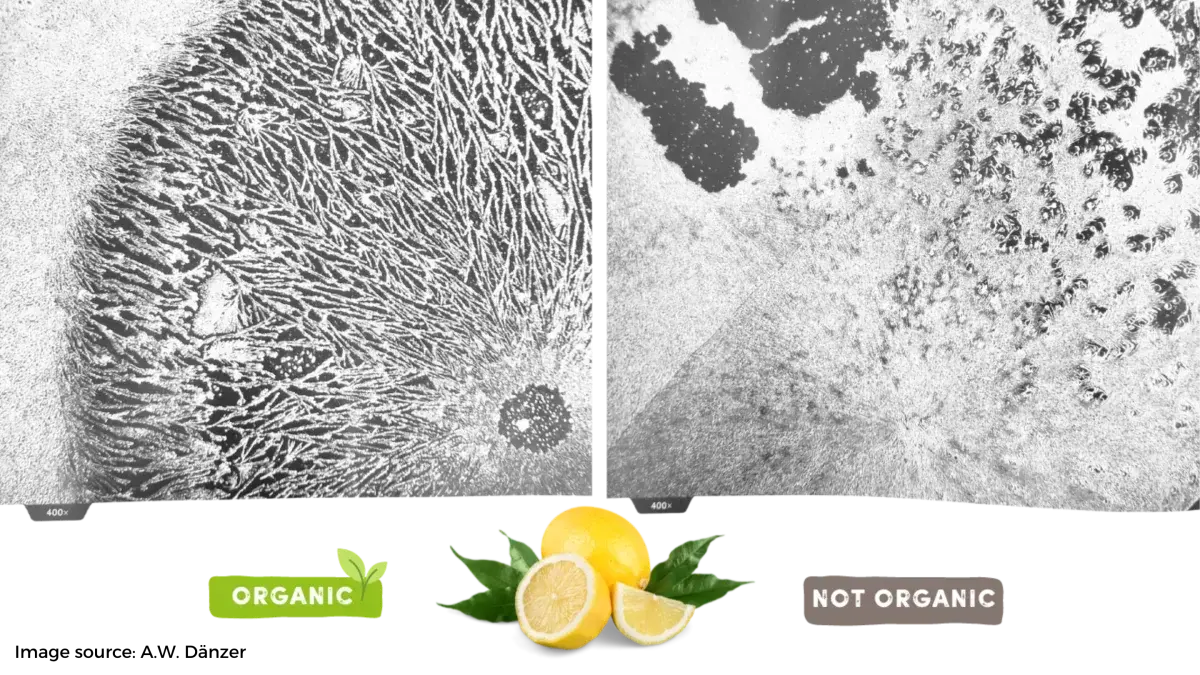
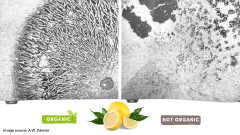
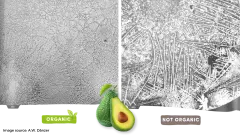
The Swiss researcher and entrepreneur A.W. Dänzer, founder of Soyana*, has been working since 1996 on revealing the hidden structures within food. Using a method he developed himself, he examines prepared and dried food samples under a dark-field microscope.
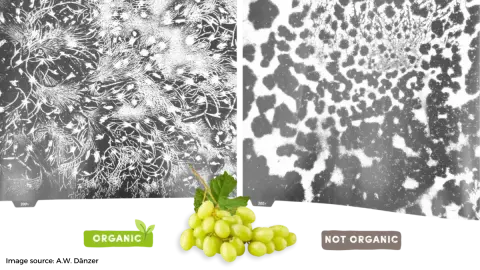
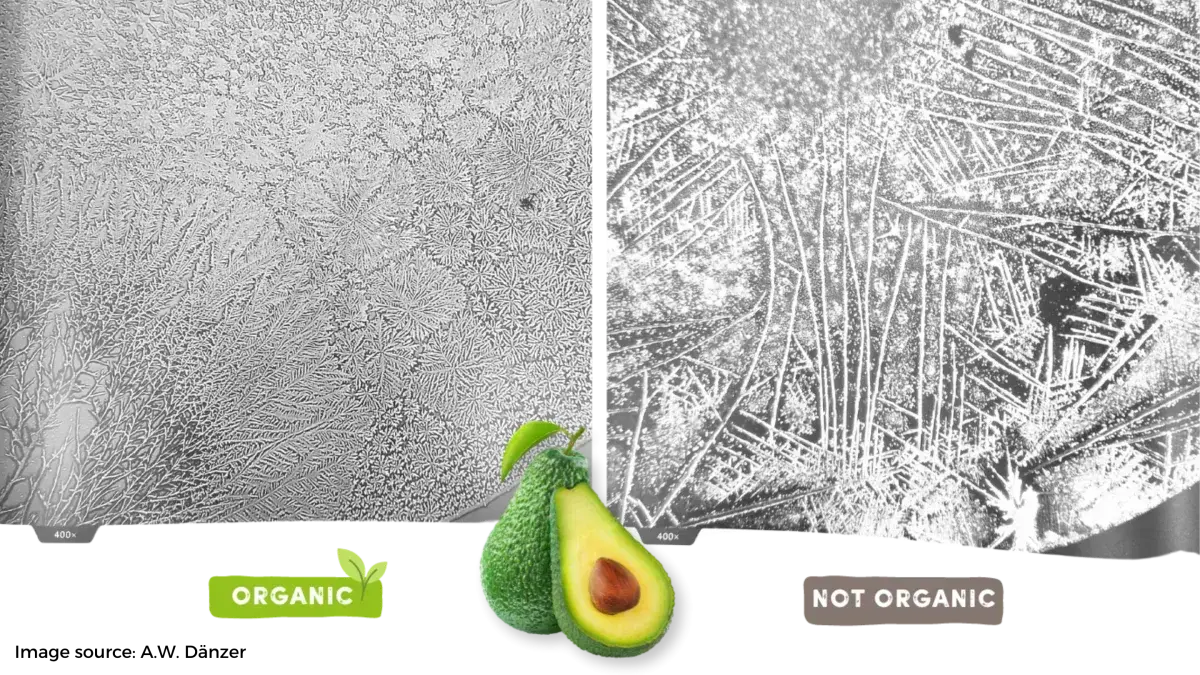
The results are striking. In his comparisons, organic foods often display complex, harmonious and finely branched patterns, whilst conventional products regularly show less coherent structures. Dänzer sees this as evidence of differences in the vitality and structure of foods.
What does scientific research say?
Researchers from the universities of Bonn and Kassel, amongst others, have also studied the crystal structures of foodstuffs. A study published in 2022 by Jürgen Fritz and colleagues examined wheat, grape juice and rocket from different cultivation systems.
In the study, the crystal images of biodynamic products generally showed the fewest signs of degradation, followed by organic products and then conventionally grown products.
The researchers see this as an indication that organic and, in particular, biodynamic products may be more resistant to stress, such as natural ageing processes after harvest. It is possible that organically and biodynamically grown products therefore retain their quality for longer during storage. Whether this is actually the case remains to be seen through further research. After all, shelf life depends on several factors, including variety, ripeness at harvest and storage conditions.
Making the invisible visible
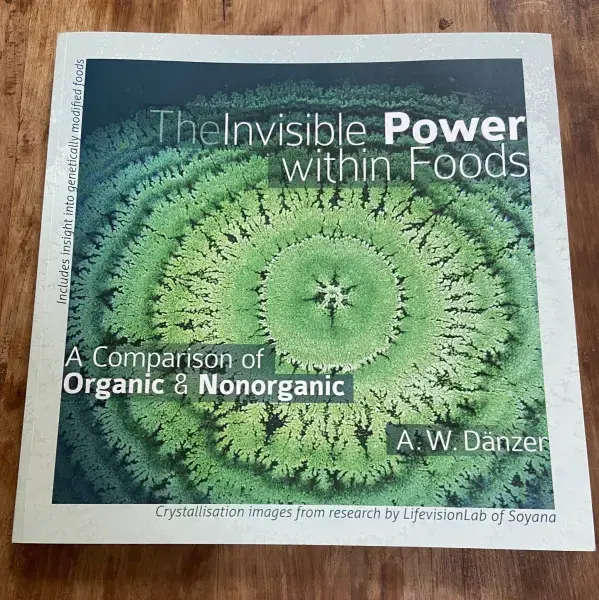
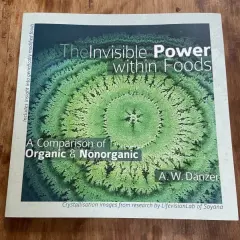
Dänzer has compiled his findings in the richly illustrated book *The Invisible Power within Foods – A Comparison of Organic & Non-organic*. With hundreds of microscopic photographs of organic and conventionally grown foods, he reveals a world that normally remains hidden from us.
The images invite us to look at our everyday food with fresh eyes. For behind the outward appearance of fruit and vegetables lies a fascinating world that is far from having been fully explored.
Curious to see more extraordinary crystal images and learn the story behind them? The book can be ordered in various languages via bio-nichtbio.info.
* Soyana is a successful Swiss company, the first in Switzerland to offer sustainable meat alternatives.
Sources
- Fritz, J. et al. (2022) – Analytical perception and kinesthetic engagement in the evaluation of copper chloride crystallisation patterns in samples of wheat, grape juice and rocket from conventional, organic and biodynamic cultivation. Chemical and Biological Technologies in Agriculture, 9, 103. Scientific publication.
- Dänzer, A.W. (2016) – The Invisible Power within Foods – A Comparison of Organic & Non-organic. Verlag Bewusstes Dasein. More about the book.
News & releases
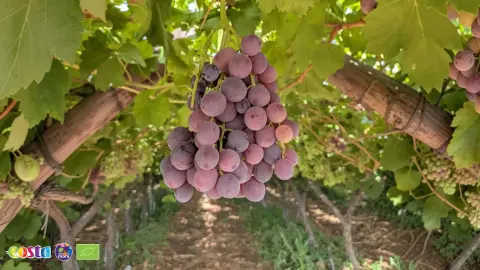
South African organic grapes: earliest-ever start, but lower volumes
Last week, our colleagues Koen, Peke and Dennis visited various organic grape suppliers and growers in the Northern Cape (Orange River) and Western Cape in South Africa to assess the outlook for the new overseas grape season.
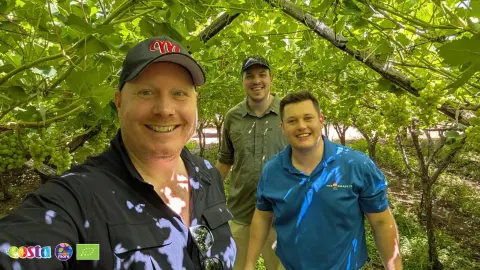
From citrus to grapes: visiting our South African partners
Last week, Dennis, Peke and Koen from our sourcing & procurement team travelled through South Africa to visit our citrus and grape growers and export partners. It was a busy week, with visits to various growing regions in the Eastern Cape, Western Cape and Northern Cape. The trip focused on evaluating the citrus season and looking ahead to the new grape season.
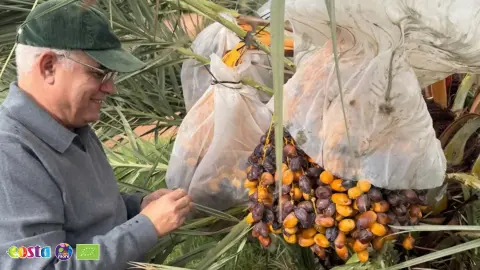
New harvest of organic Medjool dates from Morocco: demand is growing rapidly
The first container of organic Medjool dates from the new harvest in Morocco sold out completely within a week. Demand for these premium dates is growing strongly and currently exceeds the available volume. From January, we can once again accommodate new supply programmes and additional orders. Until then, organic Medjool dates from Mexico are ensuring a continuous supply.
Copyright © Eosta | Webdesign: Pencilpoint - creatief in vorm & inhoud