Lower pear stocks in Europe
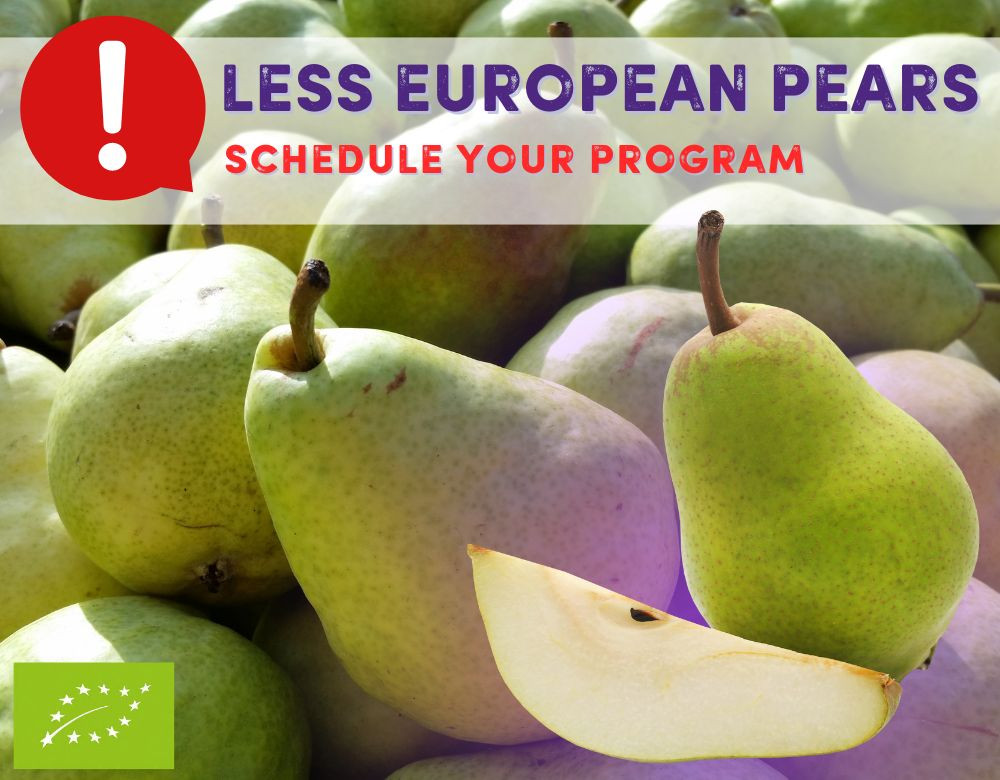
European countries forecast one of lowest pear harvests in 10 years. Since January, pear stocks in Europe have been lower compared to previous years. The new crop of Dutch organic pears is expected early September. We recommend you plan your program or part of your program with us, as there will inevitably be some gaps.
The gaps in markets are heavily dependent on foreign supplies from Italy and France. We want to help to guarantee you a stable/quality supply from the Netherlands and Belgium.
Some figures
The upcoming pear harvest will be the second lowest harvest in 10 years in Europe. According to initial estimates released the week before last at Interpera, the international pear congress in Lleida, Spain, the coming European pear harvest will be one of the smallest in the last 10 years, with an expected yield of around 1,900,000 tonnes.
Based on the flowering and fruit set, Spanish production will increase to 190,600 tonnes of pears (+53%), Portuguese to 130,000 tonnes (+7%) and Belgian to 366,000 tonnes (+6%). In France, the harvest is expected to decline to 109,000 tonnes (-26%). No exact crop forecasts are yet available for The Netherlands and Italy, but they are also expecting a downward trend.
Contact your Eosta account manager for the options regarding your program in time.