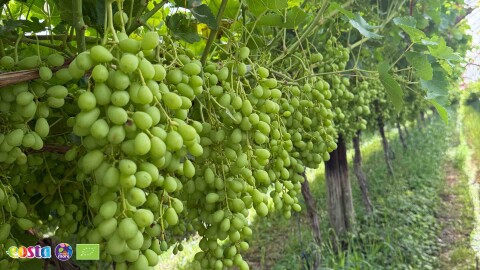
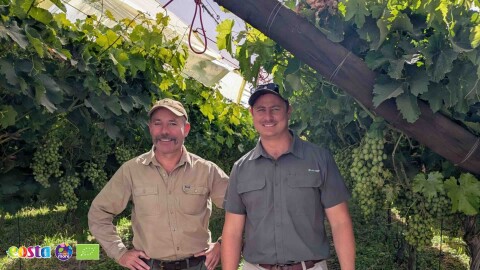
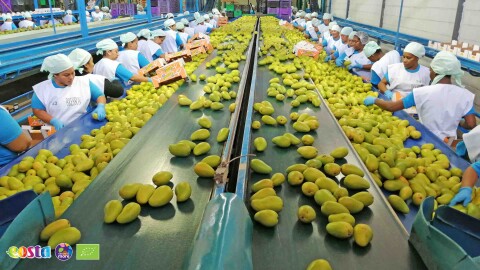
As water resources come under mounting pressure globally, Eosta says its Organic Raingrown concept offers a sustainable alternative for water-intensive crops, relying solely on natural rainfall while supporting better soil water retention through organic farming methods
As water resources come under mounting pressure globally, Eosta says its Organic Raingrown concept offers a sustainable alternative for water-intensive crops, relying solely on natural rainfall while supporting better soil water retention through organic farming methods
Whether you’re a Navel orange producer in Spain or South Africa, or an avocado grower in Mexico or Peru, there is one issue that surely crosses all of these geographies – water is now in short supply. For water-intensive crops like citrus and avocados, water scarcity is a grow-ing issue, and unless we start embracing different ways of thinking it’s only going to get worse.
According to the Water Footprint Network, growing a single kilogramme of avocados consumes an average of 1,981 litres of water. Likewise, some 560 litres are typically used to produce a kilo of oranges, while an average of 790 litres are required to deliver a kilo of bananas. All enormous figures at a time when water resources are under significant stress in many areas of the world.
In the case of most citrus consumed within Europe, whether it is sourced from Spain, Italy, South Africa or Egypt, producers usually rely on water from overburdened rivers, aquifers, or dam systems – sources which also supply households and a range of industries. And all at a time when valuable resources like the Nile and Guadalquivir River basins are under pressure from climate change and population growth.
For an even-more water-intensive crop like avocados, the picture is still more stark. Europe’s appetite for avocados is soaring, with the total value of the market forecast to top €3bn by 2029. From a water consumption point of view, meeting this demand is going to be a real challenge. According to Eosta’s own calculations, the equivalent of 1,600 one-litre bottles of water are required to produce just five avocados.
Making use of natural rainfall
Such figures make for sobering reading, and underline the need for fresh thinking and solutions. One such solution is Eosta’s Organic Raingrown concept, which highlights resource-friendly methods being used to commercially produce oranges in Peru and avocados in Mexico, Kenya and Tanzania. Using this method addresses the water crisis in two key ways.
Firstly, by relying solely on natural rainfall (green water), the Organic Raingrown concept avoids putting pressure on freshwater sources such as rivers, aquifers and reservoirs. This factor is especially relevant for citrus and avocados, both crops grown in regions facing water stress.
Secondly, the organic farming methods being used by Eosta’s growers naturally support better water retention. By avoiding synthetic chemicals and focusing on soil health, organic systems improve soil structure and increase its capacity to absorb and retain moisture. This means rainwater is used more efficiently and sustainably.
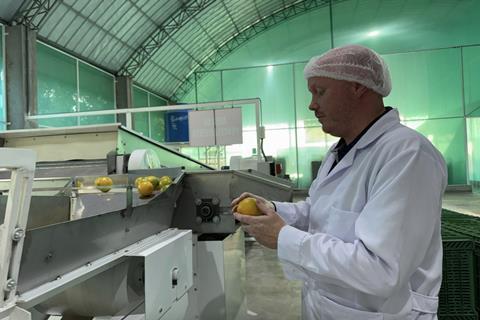
A good example are Eosta’s Jucy Gold Organic Raingrown oranges from Peru. Organically-grown, the oranges being produced by the Kivinaki Cooperative in the tropical Chanchamayo Valley not only offer a consistently high 45 per cent juice content, they are also the first available on the European market to be 100 per cent raingrown.
Jucy Gold oranges are also socially responsible. Produced by small-scale farmers or cooperatives – and shipped in bulk by sea – the fruit often results in a lower CO2 footprint than transporting the same volume of oranges by truck from Spain to the Netherlands.
The Organic Raingrown concept is an example of how thinking in different ways can deliver solutions at a time when access to water is under stress like never before. These highly-sustainable systems, which are well-suited to regions where water is in short supply, are already being used by Eosta’s growers from Kenya and Tanzania to Mexico. It might still be a rare sight on European markets, but we believe Raingrown is one way of offering hope for the future – we hope you do too.
- By Steven Maxwell